Before you dive in.
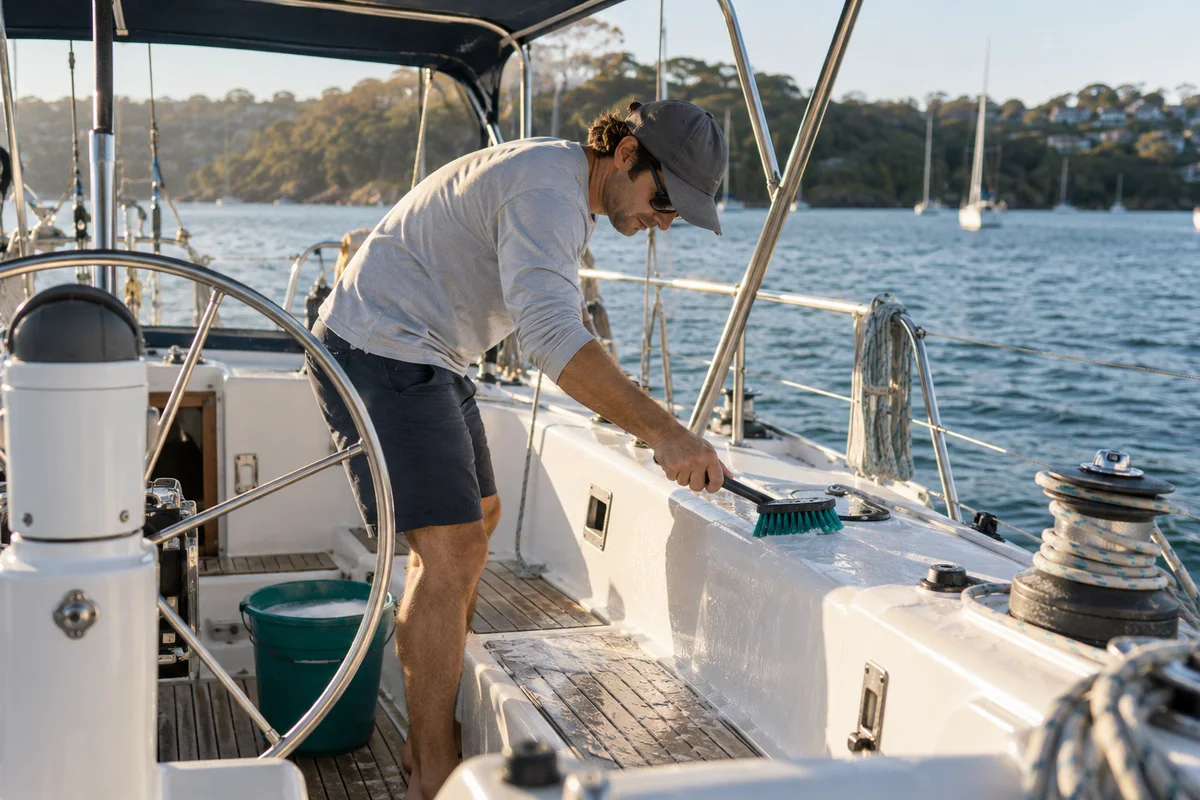
Salt, sun and everyday use leave their mark. Find boat-cleaning businesses for regular care, a seasonal tidy-up or a more detailed job before a sale or special trip.
- What is cleaning, and what would require restoration or repair?
- How will products be selected for the existing surfaces?
- What does the quote exclude?
Salt, sun and everyday use leave their mark. Find boat-cleaning businesses for regular care, a seasonal tidy-up or a more detailed job before a sale or special trip.
Define what a clean boat means to you
Boat cleaning ranges from a regular wash to a detailed interior refresh or a carefully planned finish-restoration job. These are different services, so describe the result you want instead of asking for a general clean. A cruising yacht returning from a long trip may need attention to lockers and living spaces; a boat being prepared for sale may need a different presentation. Take photographs and identify areas of concern. Explain whether the vessel will remain afloat, whether you will be aboard and what access is available. A clear brief gives the business a better chance of quoting the actual work.
Identify the surfaces before choosing treatment
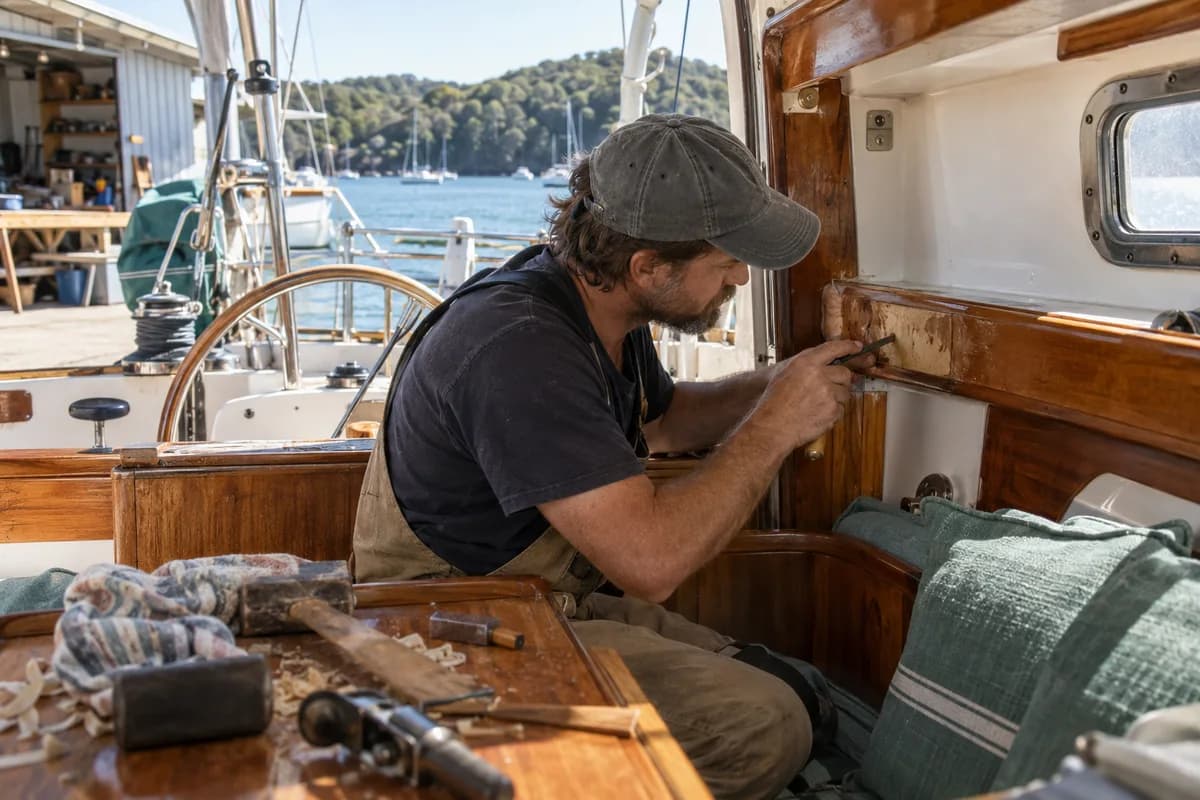
A sailing boat can contain gelcoat, painted finishes, timber, clear panels, fabrics and specialist deck surfaces within a small area. Tell the cleaner about any known coatings, repairs or manufacturer care instructions. Ask how the proposed methods suit those materials, especially if you are considering polishing or stain treatment. Do not assume that a product suitable for one area belongs everywhere aboard. If the finish is damaged or its history is unknown, discuss an assessment before agreeing to restoration work. Cleaning should be planned around the surface condition rather than used to conceal a problem that needs another trade.
Make the scope visible in the quote
Ask which areas are included and which are excluded. Cockpit lockers, bilges, canvas, upholstery and internal cupboards can be easy sources of misunderstanding. Clarify whether the service includes moving personal belongings or whether you need to clear the boat first. For exterior work, discuss access to water and power and any marina requirements. If the quote uses terms such as detailing or polishing, ask the business to explain the actual tasks and expected finish. Comparing two clear scopes is more useful than comparing two different interpretations of what a full boat clean ought to mean.
Prepare the boat for a practical visit
Remove or secure personal belongings as agreed, identify fragile equipment and explain any access restrictions. Provide a reliable contact in case the cleaner discovers a problem or needs a decision. Check the marina's rules for visiting businesses and confirm that the proposed work is permitted in the berth. If products or runoff need special handling, the provider should explain how it will meet the site's requirements. Schedule the work when the boat is available and other trades will not undo it immediately. A little coordination can prevent paying for a finish that is covered in dust during the next repair.
Review the result and plan realistic upkeep
Inspect the completed work against the agreed scope, preferably before the provider leaves if practical. Ask about care between visits and whether any area needs attention from a repairer rather than further cleaning. Keep a record of products or treatments used where that information will matter later. If you want a recurring service, agree on frequency, access and how extra work will be approved. The most useful cleaning arrangement fits your sailing habits and the condition of the boat. It should help you enjoy time aboard, with a clear understanding of what routine care can and cannot achieve.
Make the first enquiry count.
A cleaning brief should name the surfaces and the result you want. Explain existing coatings, marks or delicate fittings that may need special treatment. Ask the business to inspect uncertain areas before choosing a process, especially when the job could be confused with polishing or surface restoration.
What a useful quote should settle
Compare included areas, preparation, product suitability, access, water or power needs and how the finished work will be reviewed.
How to compare marine service quotes →Which conversation do you need?
Start with the situation that describes what you need. These are different enquiry briefs, so ask the provider to confirm the scope that fits yours.
Routine wash
You need clearly defined areas cleaned.
What surfaces and preparation are included?
Polishing enquiry
You want a different surface result.
How does the proposed process differ from washing?
Condition concern
A mark or finish needs assessment before treatment.
Should another specialist inspect it before cleaning begins?
Put the service in its sailing context.
Compare the regional factors and connected services that can shape this decision. These selected passages are read from YouSail’s published guides, alongside our enquiry advice above. Open the places and topics relevant to your boat; confirm current arrangements with the provider.
Antifouling in Brisbane and Moreton BayMarine Services in Brisbane: The Complete Sailor’s Guide
Antifouling around Brisbane is a serious maintenance item because warm water and long marina stays can foul yachts quickly. A boat that sits in Manly Harbour, the Brisbane River, Scarborough, Raby Bay or Redland Bay may lose speed, engine efficiency and sailing performance well before the owner notices from the deck.
A good Brisbane antifoul should not be treated as just paint. When the boat is out, check the hull, keel, rudder, anodes, propeller, shaft, saildrive, cutlass bearing, seacocks, through-hulls, transducers, grounding marks and old antifoul condition. If the boat is heading north, south, offshore or into a race program, the lift should become a full underwater inspection.
The right antifoul location depends on the boat’s home area. Manly works for most bayside yachts. Scarborough makes sense for northern bay boats. Redland City Marina or Redlands Coast Marina can suit southern bay boats. Rivergate and The Yard Brisbane suit larger or more complex refits.
Moreton Bay also adds an environmental layer. Queensland’s Moreton Bay Marine Park guidance says visitors must follow go-slow and no-anchoring-area rules, and the marine park has anchoring time limits, including permit requirements for anchoring more than 14 consecutive days in one area or more than 30 days in a 60-day period in one area. Queensland Government guidance also says marine pests can be transported by vessel fouling and that in-water cleaning should only be undertaken where out-of-water cleaning is not operationally practical and where risk is acceptable under relevant guidance.
For sailors, that means hull maintenance is not only about speed. It is also about compliance, biosecurity, seagrass, reefs, public moorings, sensitive habitats and responsible use of Moreton Bay.
Read the complete YouSail guide ↗ · Source updated 24/08/2026
Antifouling and tropical hull maintenanceMarine Services in Cairns: The Complete Sailor’s Guide
Antifouling in Cairns is not a cosmetic job. It is a tropical operating requirement. Warm water, high biological growth, wet-season inactivity, marina stays and long periods on moorings can turn an average bottom into a serious performance and fuel problem.
A Cairns antifoul should be treated as a full underwater inspection. When the boat is out, the owner should check anodes, seacocks, skin fittings, shaft or saildrive, propeller, rudder bearings, keel joint, transducers, grounding marks, osmosis, paint compatibility and any suspicious cracking. A simple lift, wash, paint and relaunch may be enough for a well-known boat with clean records, but many cruising yachts arriving in Cairns have unknown underwater histories.
Cairns Boat Yard specifically promotes antifouling, Propspeed application, topside polishing, waterblasting and anode replacement. The Big Boat Shed’s hardstand and travel-lift setup makes it part of the same practical service environment for boats that need lift-out and yard time.
The tropical environment also makes biosecurity more important. Queensland Government biosecurity guidance says marine pests can attach to boats or be transported in ballast, and advises removing marine fouling and treating it as a potential biosecurity risk. It also says in-water cleaning should only be undertaken when out-of-water cleaning is not operationally practicable and when the biofouling removal presents acceptable risk under relevant guidance.
For Cairns sailors, that means hull cleaning, antifoul choice and in-water scrubbing are not only about speed. They connect to reef protection, marina rules, environmental compliance and the risk of moving pests through the Coral Sea, reef anchorages and northern ports.
Read the complete YouSail guide ↗ · Source updated 24/08/2026
Haul-out, hardstand and antifoulingMarine Services in the Whitsundays: The Complete Sailor’s Guide
Antifouling in the Whitsundays is not optional maintenance. Warm water, high usage, charter activity, idle periods, tropical growth and long marina stays can foul hulls quickly. A fouled yacht sails slower, motors harder, uses more fuel, points worse and can become much harder to handle under sail.
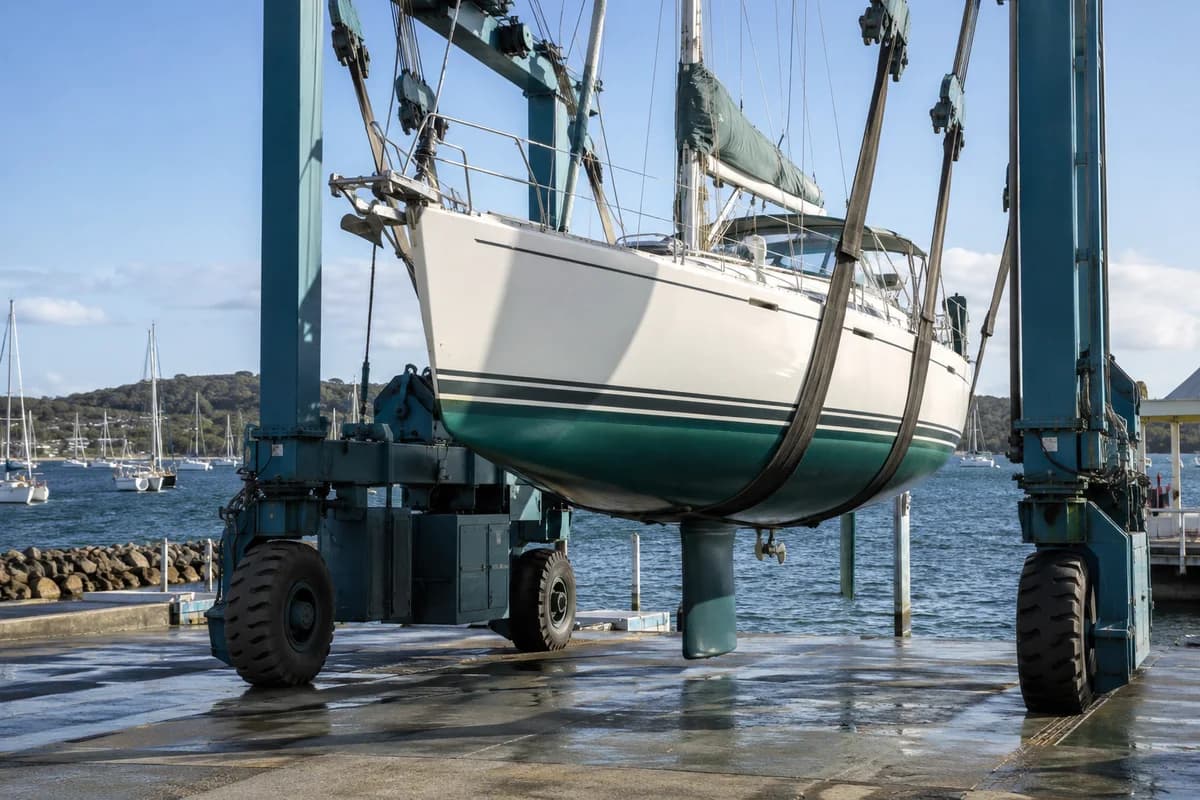
The local haul-out focus is Hawkes Boatyard at Coral Sea Marina. Hawkes publishes travel-lift haul-out information and onsite trade access. For a visiting sailor, this means a maintenance stop can be structured properly: berth the boat, arrange haul-out, clean the hull, inspect underwater gear, fix defects, buy supplies, relaunch and return to the islands.
A Whitsundays haul-out should include:
Antifoul condition, anodes, saildrive or shaft, propeller, rudder bearings, keel joint, seacocks, through-hulls, transducers, strainer intakes, old repairs, gelcoat blisters, grounding marks, bow thruster if fitted, hull polish, topsides condition and any insurance or survey requirements.
The environmental layer matters too. The Reef Authority says public moorings and no-anchoring areas exist in the Great Barrier Reef Marine Park, including Whitsunday-specific no-anchoring areas, and directs boaters to responsible mooring and anchoring guidance. Queensland’s reef-care guidance explains that reef protection markers and public moorings are used where anchoring has damaged coral, and that no-anchoring areas are marked by white pyramid-shaped buoys with blue Marine Parks symbols.
Hull maintenance is not only about speed. It is also part of responsible reef use.
Read the complete YouSail guide ↗ · Source updated 24/08/2026
Haul-out, hardstand and antifoulingMarine Services in Newcastle: The Complete Sailor’s Guide
Haul-out is the service that separates guessing from knowing. A boat may look fine in a pen at Wickham or a mooring on Lake Macquarie, but the real story is underwater: fouling, anodes, propeller, shaft, saildrive, rudder bearings, keel joint, seacocks, through-hulls, transducers, osmosis, grounding marks and old antifoul layers.
NCYC’s service environment includes the privately operated Midcoast Marine boatyard, described by SailFest as having a 40-tonne travel lift, concrete hardstand, indoor maintenance area and paint shop. JR Marine Services at Lake Macquarie says its slipway can cater for yachts and boats up to 45 feet. d’Albora Nelson Bay Marina has a full-service boatyard with a 50-tonne travel lift, hardstand and marine contractors. Soldiers Point Marine Centre is described as having two slipways of 40 and 80 tonne capacity, full workshop facilities and shipwright support.
A Newcastle-region antifoul should not be only a paint refresh. The lift is the right time to check anodes, seacocks, saildrive, propeller, shaft, cutlass bearing, rudder play, keel joint, transducers, bow thruster if fitted, grounding marks, skin fittings, old coatings and any survey items.
Use YouSail Haul-out / Slipway when the boat needs to come out, and link to YouSail Boatbuilding & Repairs when the lift reveals structural, hull, rudder, keel or deck work.
Read the complete YouSail guide ↗ · Source updated 24/08/2026
Haul-out, hardstand and antifoulingMarine Services in Perth: The Complete Sailor’s Guide
Haul-out is the moment Perth sailors stop guessing. A boat may feel fine in the pen but hide anode depletion, prop damage, shaft play, saildrive corrosion, rudder movement, keel-joint marks, old antifoul layers, seacock problems, osmosis, through-hull age or transducer leaks.
Fremantle has the deepest private-yacht haul-out layer. Fremantle Sailing Club publishes boatyard, haul-out, work area and trade information. Blue HQ offers 210-tonne, 60-tonne and 30-tonne travel-lift access and a turnkey lift and maintenance service. Bay Marine says it has boat hardstanding bays with power and water and 32-tonne boat lifting capacity. Aquarama Slipways in East Fremantle says it handles craft up to 40 ft onsite and carries out larger work at Fremantle Sailing Club.
South of Perth Yacht Club’s travel lift and hardstand make it important for Swan Canning boats. Hillarys has lifting and maintenance support on the northern coast. Mandurah becomes a southern fallback for lift, hardstand and service work.
A Perth haul-out should include hull wash, antifoul assessment, anode check, propeller and shaft inspection, saildrive inspection if fitted, rudder-bearing check, keel joint inspection, seacock exercise, through-hull inspection, transducer check, grounding-mark check and a photo record before relaunch.
Use YouSail Haul-out / Slipway for this service path.
Read the complete YouSail guide ↗ · Source updated 27/08/2026
Haul-out, slipways, hardstand and antifoulingMarine Services in Hobart: The Complete Sailor’s Guide
Haul-out in Hobart is one of the most important service decisions because southern sailing is unforgiving. A yacht may look fine in the marina and still have hidden problems below the waterline: tired antifoul, worn anodes, leaking seacocks, shaft play, saildrive corrosion, rudder movement, keel-joint marks, grounding damage, old transducer bedding or coating failure.
Hobart sailors have several haul-out pathways. RYCT lists haul-out, slipway and hardstand services on the Derwent. DSS lists haul-out and hardstand at Sandy Bay. Cleanlift Marine provides lift-out, roll-in, undercover slipping and antifouling services at Hobart Slipyards. Margate Marina offers a slipyard, hardstand and haul-out for yachts, motor boats and catamarans. Oyster Cove Marina provides a boatyard and hardstand support at Kettering.
A proper Hobart haul-out should include hull wash, antifoul assessment, anodes, propeller, shaft or saildrive, rudder bearings, keel joint, seacocks, through-hulls, transducers, grounding marks, osmosis, hull polish and a photo record.
For older timber or classic yachts, add fastenings, caulking, planking, deck leaks, mast step and structural timber inspection. Hobart’s maritime culture includes many older and traditional boats, so a quick antifoul should not replace proper structural attention.
Use YouSail Haul-out / Slipway when the boat needs to come out.
Read the complete YouSail guide ↗ · Source updated 24/08/2026
Haul-out, hardstand and antifoulingMarine Services in Darwin: The Complete Sailor’s Guide
Darwin haul-out planning is very different from southern Australian haul-out planning. Tide, cyclone season, hardstand availability, lock access, project duration, heat, rain, biofouling and tropical service demand all matter.
The Northern Territory Marine Facility says it has boat lifting and hardstand capacity for vessels up to 150 tonnes and is located beside Tipperary Waters and Frances Bay Marinas. NT Marine Group describes Cullen Bay Slipway as a full-service haul-out and maintenance facility for inspections, repairs, coatings and refits. Dinah Beach provides hardstand and careening facilities for full members under its own rules and booking system.
A Darwin haul-out should include antifoul condition, anodes, propeller, shaft, saildrive, rudder bearings, keel joint, seacocks, through-hulls, skin fittings, transducers, biofouling, marine-pest risk, grounding marks, osmosis, hull polish and storm tie-down planning if the boat will remain ashore.
Darwin also has marine-pest implications. Cullen Bay Marina warns that some vessels from international waters or interstate may need inspection and treatment for marine pests before entering a marina. NT Government also publishes Darwin Harbour marine pest monitoring reports for locations including Cullen Bay, Tipperary Waters and Frances Bay Mooring Basin.
Use YouSail Haul-out / Slipway for this path.
Read the complete YouSail guide ↗ · Source updated 27/08/2026
Haul-out, hardstand and antifoulingMarine Services on the Gold Coast: The Complete Sailor’s Guide
Haul-out is where the Gold Coast becomes world-class. Very few Australian regions can match Coomera’s combination of lifts, hardstand, superyacht infrastructure, trades, chandlery and project capability.
The Boat Works lists multiple lift systems from 45 tonnes to 300 tonnes, covered hardstand and extensive onsite marine professionals. GCCM lists multiple boat-lifting options, including 50 and 300-tonne travelifts, forklifts, hydraulic trailer and beam accommodation up to 10 metres.
For a sailing yacht, the lift should not be treated as only antifoul. The Gold Coast’s warm water, heavy usage, marina stays, Broadwater fouling and tropical/subtropical conditions mean the hull can hide real issues.
A proper Gold Coast haul-out should inspect antifoul, anodes, propeller, shaft, saildrive, cutlass bearing, rudder, keel joint, through-hulls, seacocks, transducers, bow thruster if fitted, hull moisture, osmosis, previous repairs, grounding marks, topsides, boot stripe, prop coating and underwater corrosion.
For older yachts and ex-charter boats, the lift is also the right time for a surveyor, mechanic and shipwright to see the same boat at the same time. This is where the Gold Coast service ecosystem shines.
Use YouSail Haul-out / Slipway as the internal path for this section.
Read the complete YouSail guide ↗ · Source updated 24/08/2026
Haul-out, hardstand, slipway and antifoulingMarine Services in Gladstone: The Complete Sailor’s Guide
Gladstone’s haul-out picture is a mix of marina-listed services, marine centre support, slipway references and commercial marine operators. It is not a glossy single-operator yacht yard like some larger cities, but it is practical.
Gladstone Ports Corporation lists MIPEC Gladstone Slipway among businesses operating within the marina. Port City Fabrications says it operates from the Gladstone Marina Shore Base and provides vessel haul-outs using straddle lift and slipway, welding, fibreglass repairs, protective coatings and full vessel fit-outs. Fodico Marine Group lists secure hardstand areas and large workshops at its Gladstone Marina operations base.
For sailors, the haul-out should be treated as a full underwater inspection. Warm Queensland water, reef cruising, port water, marina stays and coastal miles can all create fouling and wear.
A Gladstone haul-out should inspect antifoul condition, anodes, propeller, shaft or saildrive, cutlass bearing, rudder bearings, keel joint, seacocks, through-hulls, transducers, strainer intakes, old coatings, osmosis, grounding marks, hull polish needs and any insurance or survey items.
Use YouSail Haul-out / Slipway for this service path, then link to YouSail Boatbuilding & Repairs if the lift reveals structural, fibreglass, keel, rudder or deck work.
Read the complete YouSail guide ↗ · Source updated 27/08/2026
Three steps to a clearer decision.
What surfaces and preparation are included?
How does the proposed process differ from washing?
Should another specialist inspect it before cleaning begins?
Arrive with the right information.
Describe the surfaces, existing coatings and the result you want. Photographs should show both the overall area and the specific staining or deterioration. Explain whether the boat is afloat, ashore or in a location with restrictions on the proposed work.
Three questions worth asking
- What is cleaning, and what would require restoration or repair?
- How will products be selected for the existing surfaces?
- What does the quote exclude?
What to keep afterwards
Compare the completed work with the agreed scope and request care guidance. Record any defects the cleaner identified for a separate specialist rather than assuming appearance establishes structural condition.
Plan a useful handover →Before you make the next move.
Open a question for practical advice to help with your next decision.
Is washing the same as polishing?
No. Ask the business to describe the proposed process and expected outcome. A wash, polish and restoration can involve different work, so compare scope rather than assuming those labels are interchangeable.
Should I remove personal belongings first?
Ask what preparation is required and which lockers or spaces the business will access. Agree where loose items will go and identify areas that should not be disturbed. Clear preparation can make the appointment more efficient.
Boat cleaning & detailing: enquiry checklist
Use this to prepare your first enquiry. Print a copy to keep with your notes.
0 of 5 ready · Checks reset when you leave this page.