Tasmanian sailing enquiries often bring local routines and longer-term cruising ambitions into the same conversation. A Hobart club programme, a Tamar-based boat and a refit appointment elsewhere in the state each need their own practical brief. Start with location, access and intended use.
Hobart and the Derwent: build a regular connection
For a first course or club introduction around Hobart and the River Derwent, ask how newcomers move from one session to repeated practice. Compare the ordinary calendar and meeting arrangements rather than only the best-known events. If the boat needs maintenance, give the provider its actual berth or yard location and clarify whether equipment can be brought ashore. A workshop address and the place where work occurs may be different. Make sure everyone arranging access understands which appointment has actually been agreed.
Northern and regional bases: prepare the logistics
For boats around the Tamar, the east coast or another regional harbour, ask about travel and parts before assuming a service can fit into a short stop. Record equipment models and send a clear description of the task. If the boat is moving, choose a reliable delivery point and confirm who can accept items there. Allow inspection findings to shape the work rather than ordering an entire repair around a guessed diagnosis. Keep the relevant records available to the provider even when you are not beside the boat.
Make the maintenance window useful
A period alongside or ashore can be used for several tasks if the dependencies are understood. Ask a yard and each trade about access, preparation and the sequence of work. Separate condition assessment from optional upgrades so important questions do not disappear into an enthusiastic refit list. For a sail or rig appointment, gather previous reports and known replacement records. For onboard systems, include manuals and photographs. The better the brief, the more likely the first visit can answer the question you actually need resolved.
Check the Tasmanian source
Marine and Safety Tasmania publishes recreational boating guidance covering safety information, licensing, registration and other practical topics. Use the current official material for your intended activity. Do not treat this editorial page as current navigation advice or evidence that a particular facility is available. In the directory, choose TAS and refine the search by place or service. Confirm a provider’s scope and timing directly, especially if the work is one part of a wider travel plan.
Use the relevant facility and mooring information
Marine and Safety Tasmania provides separate information about facilities, moorings and boating requirements, including a mapping service. Use those resources to identify the appropriate official context for your proposed base. Then ask the managing operator about your particular boat and intended use. A public cruising mooring, a longer-term mooring arrangement and a marina berth should not be treated as interchangeable products. Keep allocation or permission questions with the responsible organisation and service questions with the provider. That separation helps avoid a booking conversation being mistaken for approval of a different use.
Plan a visit around service evidence and follow-up
For a boat visiting Hobart, the Tamar region or another Tasmanian base, send the service provider a concise evidence pack before discussing a firm completion date. Include equipment details, previous findings and how long the boat can remain available. Ask what happens if parts or further investigation are needed. If you will leave the region afterwards, agree how the work record and follow-up questions will be handled. A clear handover is particularly valuable when the next technician may be elsewhere. Keep the service plan connected to current local information without allowing an appointment to dictate an on-water decision.
Get to know the shore support.
Read the places and facilities that matter to your plans. These passages come from YouSail’s published regional guides and destination records.
Hobart as a sailing-service region
Hobart’s marine services are organised around the River Derwent and the waterways south of the city.
Sandy Bay is the main yacht-club and marina cluster. Royal Yacht Club of Tasmania and Derwent Sailing Squadron sit beside each other on Marieville Esplanade, giving Hobart a concentrated sailing-service base with marinas, fuel, haul-out, hardstand, yacht clubs, racing, brokerage, sailmaking and yacht-care support. RYCT says its boatyard offers 24-hour fuel, haul-out facilities, trailer-boat storage, onsite services and access to marine trade contractors. DSS describes its marina as Tasmania’s largest and most advanced club marina, with 24-hour diesel fuel, haul-out, hardstand and onsite services including brokerage, sailmaking and yacht care.
Bellerive and Lindisfarne form the eastern-shore club and marina layer. Bellerive Yacht Club says its marina has undergone a major upgrade and is positioned as a safe berth and community hub for Hobart boaters. Motor Yacht Club of Tasmania lists marina facilities, moorings, dinghy storage, cages, hardstand facilities and a slipway for members.
Prince of Wales Bay is the working marine precinct. Prince of Wales Bay Marina describes itself as a 350-berth floating pontoon marina in Hobart’s maritime precinct, with deep water, shelter and access to services and maintenance. The area is also described by planning material as a specialised industrial precinct focused on marine industries, including shipbuilding, boat repair and maritime manufacturing.
Margate and Kettering are the southern service gateways. Margate Marina says it is around 20 minutes south of Hobart, offers individual berths from 10 m to 40 m, has slipyard service for vessels up to 18 m, hardstand and trailer storage, and diesel and petrol fuel. Oyster Cove Marina at Kettering is on the D’Entrecasteaux Channel and describes 300 floating pontoon berths, a boatyard, fuel wharf and associated facilities.
The Channel and Huon region matter because many Hobart sailors do not stop at the Derwent. Kettering, Oyster Cove, Bruny Island, Cygnet, Port Huon, Dover and Recherche Bay become practical cruising and service reference points for boats heading south.
Read the full YouSail source ↗ · Updated 24/08/2026
Sandy Bay: Hobart’s main sailing-service cluster
Sandy Bay is the heart of Hobart sailing. Royal Yacht Club of Tasmania and Derwent Sailing Squadron sit on the western shore of the Derwent, close to the city, and together create the strongest sailor-specific service cluster in southern Tasmania.
Royal Yacht Club of Tasmania is one of Hobart’s most important sailing institutions. The club says it has served yachting and the community for almost 135 years, has developed from a Derwent racing club into a major sailing institution, and jointly manages the Rolex Sydney Hobart Yacht Race with the Cruising Yacht Club of Australia.
RYCT’s boatyard is directly useful for owners. It lists 24-hour diesel and unleaded fuel, haul-out for maintenance and repair, trailer boat storage, onsite brokerage and access to qualified marine trade contractors. The club also says members and non-members are welcome, which makes it relevant to visiting yachts as well as local members.
Derwent Sailing Squadron is equally important. Its marina and boatyard page describes Tasmania’s largest and most advanced club marina, 24-hour diesel fuel, haul-out, hardstand for one-design yachts, launching facilities and onsite services such as brokerage, sailmaking and yacht care.
For a sailor, Sandy Bay is the best first stop for annual maintenance, fuel, club knowledge, racing preparation, sail work, yacht-care services, Sydney Hobart logistics, survey coordination, pre-sale work and owner-managed maintenance. It is also the most natural place to ask local sailors which rigger, mechanic, sailmaker, shipwright or electrician is active and trusted.
Read the full YouSail source ↗ · Updated 24/08/2026
Bellerive and Lindisfarne: eastern-shore support
The eastern shore gives Hobart sailors more than a view back to kunanyi / Mount Wellington. It provides useful berth, club, mooring and local-service options for boats based around Bellerive, Lindisfarne, Montagu Bay, Kangaroo Bay, Howrah, Tranmere and the eastern side of the Derwent.
Bellerive Yacht Club says its marina has undergone a major upgrade and presents itself as a premier Hobart marina location for safe berthing and community. Motor Yacht Club of Tasmania at Lindisfarne lists a marina, moorings, dinghy storage, cages, hardstand facilities and a slipway for members.
This area is valuable for boats that do not need to move to Sandy Bay for every job. A local berth, mooring or slipway can simplify smaller maintenance tasks, short-term storage, tender access, owner inspections and routine service. For larger jobs, eastern-shore boats may still move to Sandy Bay, Prince of Wales Bay, Margate or Kettering, but Bellerive and Lindisfarne are part of the local service network, not just residential foreshore.
Read the full YouSail source ↗ · Updated 24/08/2026
Prince of Wales Bay: Hobart’s marine-industry precinct
Prince of Wales Bay is the working-service layer of Hobart. It is where marina, shipyard, repair, innovation, commercial vessel and marine-industry capability overlap.
Prince of Wales Bay Marina describes a 350-berth floating pontoon marina with modern facilities, deep water, all-weather shelter and access to services and maintenance. Glenorchy City Council’s marine and innovation material describes the Prince of Wales Bay precinct as a collaborative hub of maritime industries in southern Tasmania that attracts diverse and complementary businesses.
This is where bigger projects start to make sense. A yacht needing shipwright work, refit management, timber or composite repairs, salvage support, antifouling, engineering, electrical, paint, rigging, hardstand or project coordination may be better served around Prince of Wales Bay than at a standard marina berth.
Hurricane Marine is a good example of the area’s practical service mix. It says it provides marine services across Hobart, Tasmania and beyond, including detailing, slipping, winch services, boat setup advice, project management, refits, shipwright work, timber and composite work, diving, splicing, rigging, re-rigging, salvage and towing.
Cleanlift Marine adds slipping and antifouling capability. It describes itself as Tasmania’s environmentally friendly lift-out, roll-in, undercover slipping system and says it services and antifouls runabouts, sailing yachts, motor yachts and commercial vessels. Its pages also reference diesel mechanic and marine electrician access.
Prince of Wales Bay is best for haul-out, antifouling, shipwrights, larger refit work, project coordination, emergency repair, timber and composite work, salvage, industrial support and boats that need more than simple berth-based service.
Read the full YouSail source ↗ · Updated 24/08/2026
Battery Point and Hobart waterfront: sailmaking, chandlery and race logistics
Battery Point and the Hobart waterfront are service-relevant because this is where the local sailing culture, Sydney Hobart finish, chandlery and sailmaking history come together.
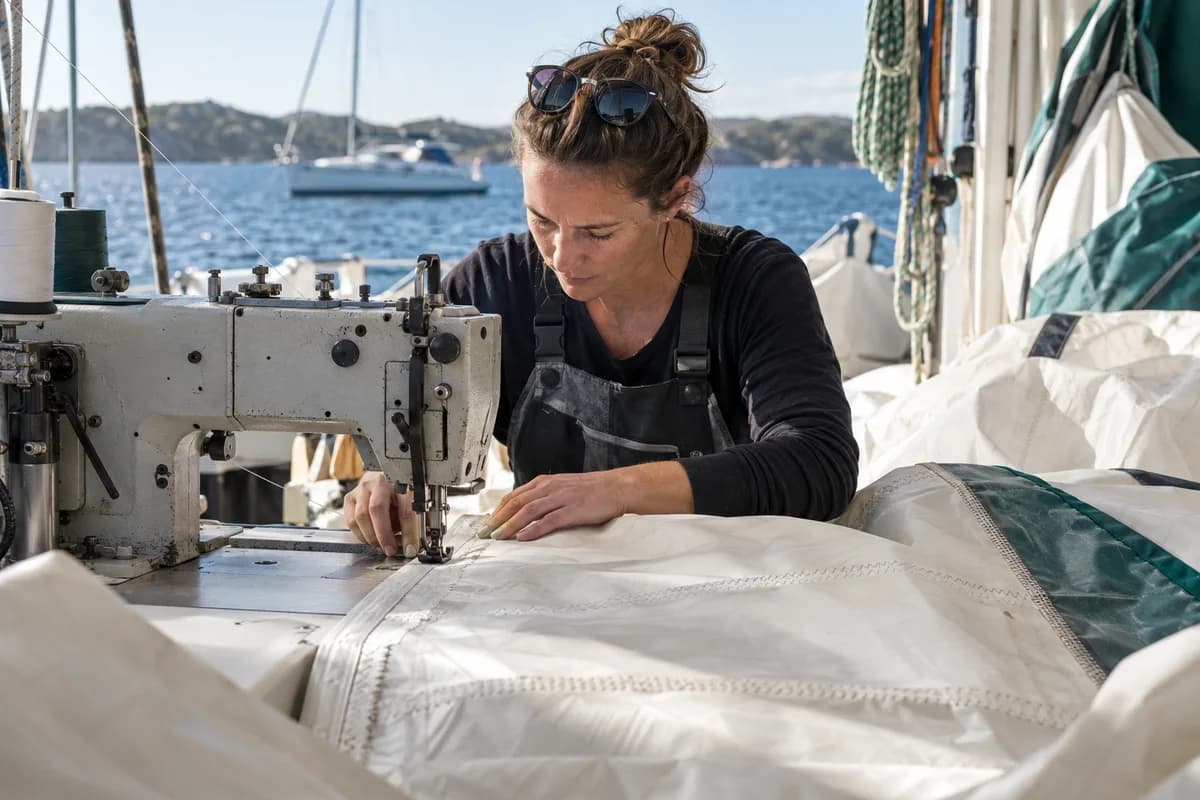
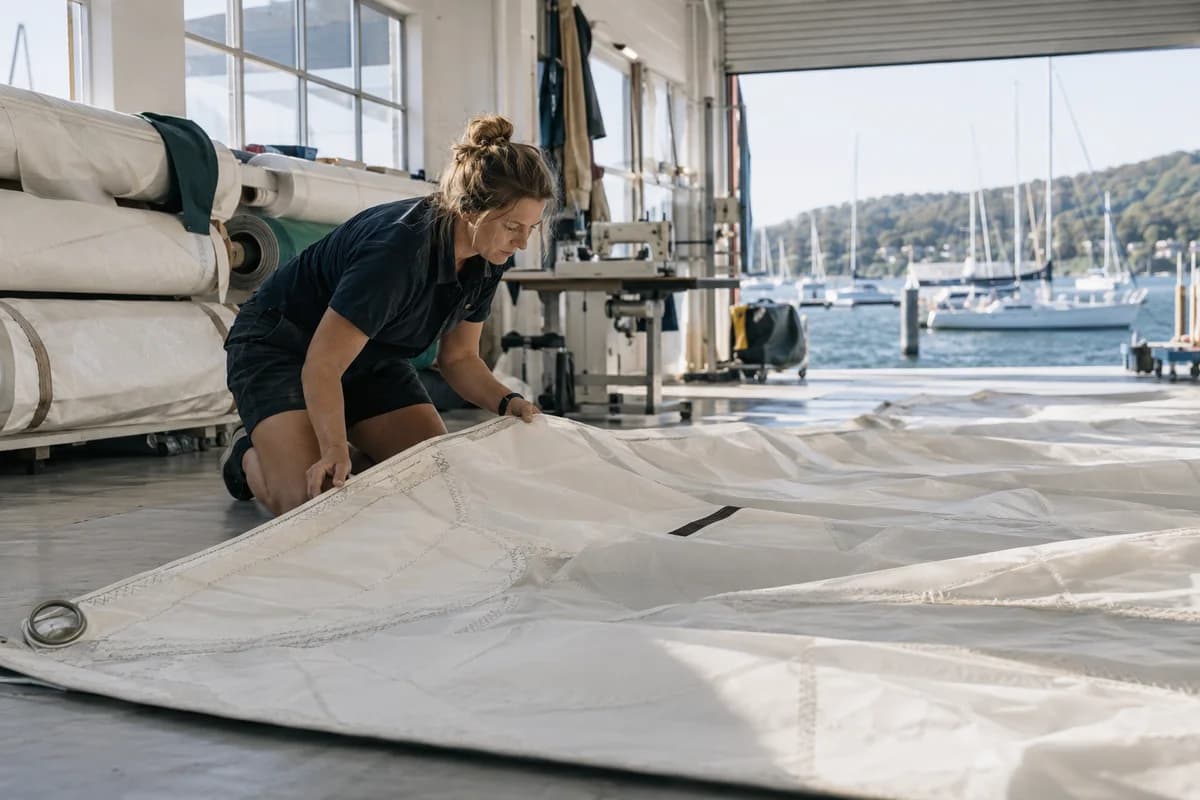
Doyle Sails Tasmania says its full manufacturing loft is located at Muirs Boatyard on the waterfront between the Sydney Hobart finish line and two of Tasmania’s largest yacht clubs. The loft’s onsite services include sailmaking, marine covers, rigging, shade sails and chandlery.
Peter Johnston Ship Chandlers is another key Hobart service reference. Its YachtCare page lists simple boat checks through to complete walk-on walk-off boating, coordination of specialist services, architectural rigging and haul-out coordination, with its store at 21 Morrison Street in Hobart.
For sailors, the Battery Point and waterfront area is not only about visiting the finish line. It is where sails, covers, chandlery, yacht-care support, race preparation, spares and practical advice are close to the Sandy Bay clubs and central Hobart.
Read the full YouSail source ↗ · Updated 24/08/2026
Margate: southern Hobart slipyard and storage
Margate is one of the most useful service alternatives south of Hobart. It is close enough to the city to be practical but positioned for boats that use the Channel, Bruny Island and southern cruising grounds.
Margate Marina says it is the only Hobart marina offering a combination of 24-hour camera surveillance, daily boat checks, gated access, courtesy car, berths from 10 m to 40 m, slipyard service for vessels up to 18 m, trailer boat and hardstand storage, and diesel and petrol fuel. Its slipyard page says Margate has a well-established slipping service, security, managed access for owners and trades, hardstand and trailer storage, and can haul yachts, motor boats and catamarans using a Roodberg submersible slipway trailer.
For a sailor, Margate is valuable when the boat is south of the city, when hardstand or storage is needed, when the owner wants a quieter service environment, or when the boat is being prepared for the D’Entrecasteaux Channel, Bruny Island, Cygnet or Recherche Bay.
Read the full YouSail source ↗ · Updated 24/08/2026
Kettering and Oyster Cove: Channel gateway services
Kettering is the gateway to Bruny Island and the D’Entrecasteaux Channel, which makes it one of the most important service and staging areas south of Hobart.
Oyster Cove Marina says it is situated in Little Oyster Cove at Kettering, 34 km south of Hobart, and comprises 300 floating pontoon berths, a boatyard, associated facilities and extensive onsite services. Its fuel-wharf information describes access through Little Oyster Cove between the moorings and the Bruny Island Ferry Terminal, and its boatyard information references hardstand support using cradles and adjustable boat stands.
Kettering is best for boats using the Channel, Bruny Island, Peppermint Bay, Cygnet, Port Huon and Recherche Bay. It is also a logical service base for cruising yachts that are not planning to stay in Hobart itself.
Able Marine Shipwrights adds important Channel-side rigging and repair support. It says it is based on the Kettering waterfront and provides mast, boom and standing rigging services across the D’Entrecasteaux Channel, Huon Valley and greater Tasmania.
Read the full YouSail source ↗ · Updated 24/08/2026
Marinas and berthing in Hobart
Hobart marina choice is really a question about how the boat will be used.
A racing yacht, Sydney Hobart boat or Derwent-based club boat will often focus on Sandy Bay, RYCT or DSS. A boat on the eastern shore may prefer Bellerive or Lindisfarne. A boat needing larger service access may look toward Prince of Wales Bay. A cruising yacht heading south may use Margate or Oyster Cove. A yacht in the Channel may not need Hobart city at all unless the job demands it.
Use YouSail Marina Service when comparing berths, fuel, pump-out, hardstand, slipping, security, storage and contractor access.
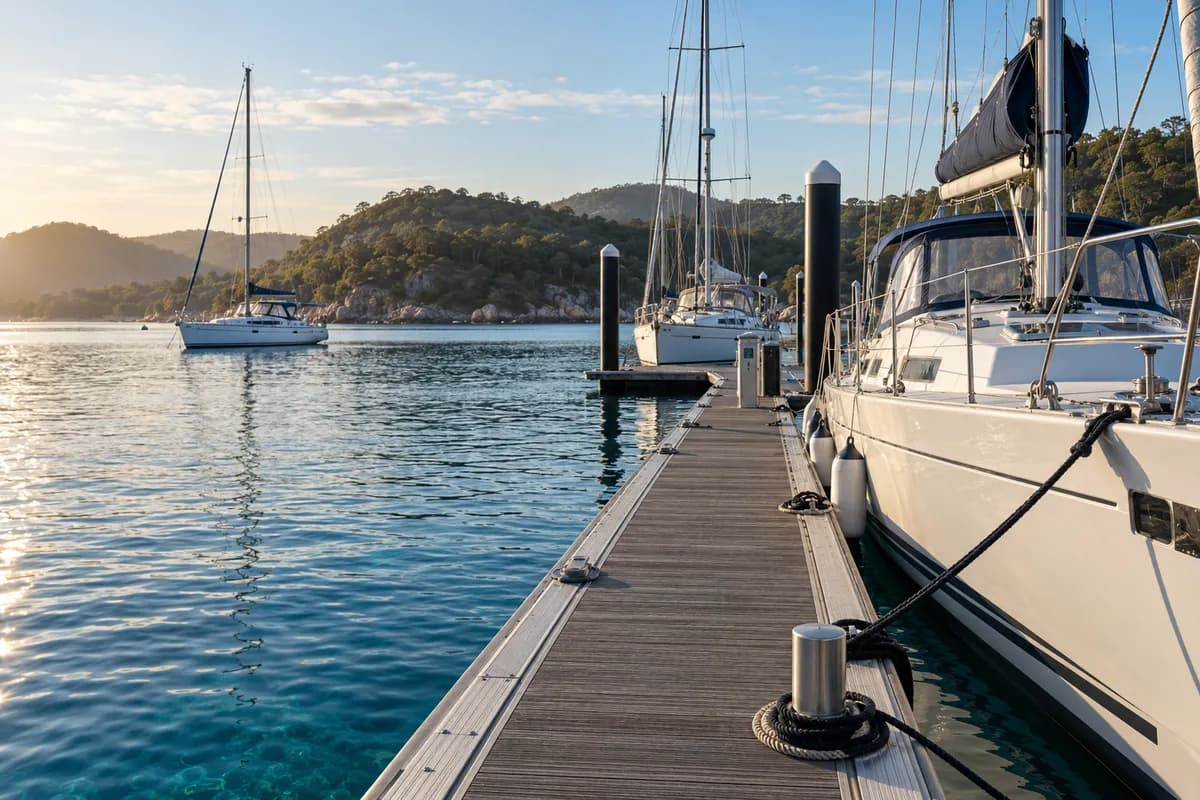
RYCT offers modern berthing, fuel, slipway, hardstand and visitor facilities close to central Hobart. DSS offers a major club marina, 24-hour diesel, haul-out, hardstand and onsite service providers. Prince of Wales Bay Marina offers a larger marina base in the maritime precinct. Margate and Oyster Cove give strong southern alternatives for cruising yachts.
Read the full YouSail source ↗ · Updated 24/08/2026
Haul-out, slipways, hardstand and antifouling
Haul-out in Hobart is one of the most important service decisions because southern sailing is unforgiving. A yacht may look fine in the marina and still have hidden problems below the waterline: tired antifoul, worn anodes, leaking seacocks, shaft play, saildrive corrosion, rudder movement, keel-joint marks, grounding damage, old transducer bedding or coating failure.
Hobart sailors have several haul-out pathways. RYCT lists haul-out, slipway and hardstand services on the Derwent. DSS lists haul-out and hardstand at Sandy Bay. Cleanlift Marine provides lift-out, roll-in, undercover slipping and antifouling services at Hobart Slipyards. Margate Marina offers a slipyard, hardstand and haul-out for yachts, motor boats and catamarans. Oyster Cove Marina provides a boatyard and hardstand support at Kettering.
A proper Hobart haul-out should include hull wash, antifoul assessment, anodes, propeller, shaft or saildrive, rudder bearings, keel joint, seacocks, through-hulls, transducers, grounding marks, osmosis, hull polish and a photo record.
For older timber or classic yachts, add fastenings, caulking, planking, deck leaks, mast step and structural timber inspection. Hobart’s maritime culture includes many older and traditional boats, so a quick antifoul should not replace proper structural attention.
Use YouSail Haul-out / Slipway when the boat needs to come out.
Read the full YouSail source ↗ · Updated 24/08/2026
Shipwrights, timber, composite and refit work
Hobart is one of the best Australian cities for timber, composite and traditional boat knowledge because the region has a long marine-building culture and a working maritime precinct.
Hurricane Marine lists shipwright work, timber and composite work, refits, project management, salvage, rigging and re-rigging. Richardson Devine Marine, operating from Prince of Wales Bay, says it provides full-service refits including haul-out, aluminium structural repair, machinery replacement, electrical works, electronics, plumbing, painting, hydraulics and other repair services. South Cape Marine says it has been part of the Hobart marine scene for a long time and provides rigging, boat delivery, antifouling, hydraulics, engine servicing, surface repair, osmosis and antifouling work.
For sailing yachts, shipwright work is not only about visible damage. Chainplates, mast steps, bulkheads, deck cores, rudder stocks, keel floors, traveller pads, winch bases, hatches, stanchions and cockpit drains carry load and keep water out. Hobart’s cold water, rain, UV, salt, winter moisture and strong winds can expose small defects quickly.
Use YouSail Boatbuilding & Repairs when the job involves timber, fibreglass, composite, aluminium, deck leaks, wet core, rudder repair, keel issues, structural reinforcement, refit or insurance work.
Read the full YouSail source ↗ · Updated 24/08/2026
Three steps to a clearer decision.
Choose the services and access you need in this region.
Check current local notices with the relevant boating authority.
Confirm availability and arrival arrangements directly with your provider.
Use the authority’s current information for requirements and notices. This guide was updated on .
Before you make the next move.
Open a question for practical advice to help with your next decision.
Does a Hobart listing mean statewide attendance?
No. Ask about the specific location, access and any travel arrangements. Some work may be organised through equipment delivery or a yard appointment rather than attendance at the current berth.
Where can I find current Tasmanian boating information?
Use Marine and Safety Tasmania’s official recreational boating pages linked here. Select the guidance relevant to your vessel and activity, and check local information before relying on an older document or an interstate summary.
Does a TAS listing mean the provider will travel to my boat?
No. The state filter reflects the published business location. Send the exact berth, yard or town and ask the provider to confirm attendance, travel charges and access requirements for your particular job.
Where should I begin with a Tasmanian mooring enquiry?
Use MAST’s current mooring and facility information to identify the relevant arrangement, then contact the responsible organisation about your boat and proposed use. Ask separately about permission, vessel details and any service work. A mooring shown on a map does not by itself establish your right to use it.
How can I make a service record useful after leaving Tasmania?
Ask the provider to identify completed work, equipment details, tests or checks within scope and outstanding recommendations. Save those records with the invoice. If another technician will continue the work elsewhere, share the findings accurately rather than paraphrasing an unresolved issue as a confirmed diagnosis.
Which parts of Tasmania does this guide help me explore?
Start with Hobart & the River Derwent, Tamar & northern bases, East coast & regional harbours. The regional source notes explain selected local service areas; linked business profiles describe published locations and services.
Does a business location confirm its operating area?
No. A published business address is a starting point for an enquiry. Ask the provider to confirm its service area, access arrangements and any departure point for your booking.