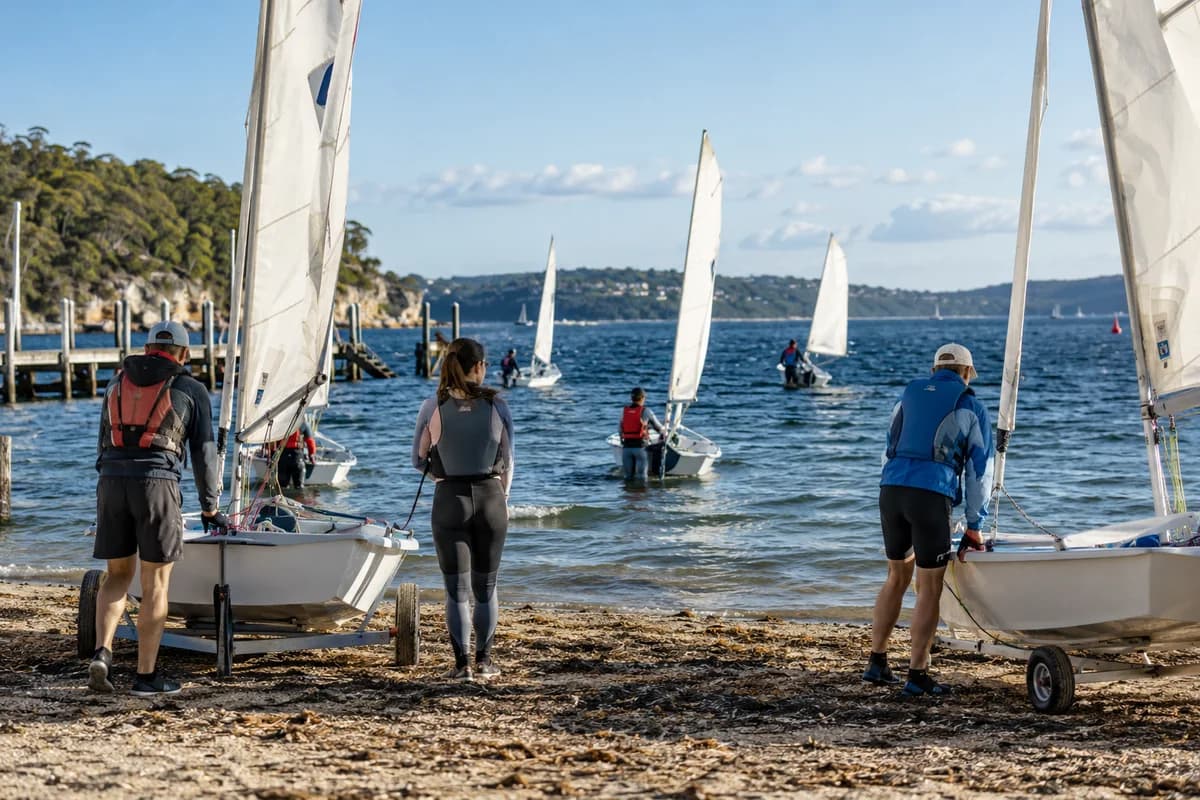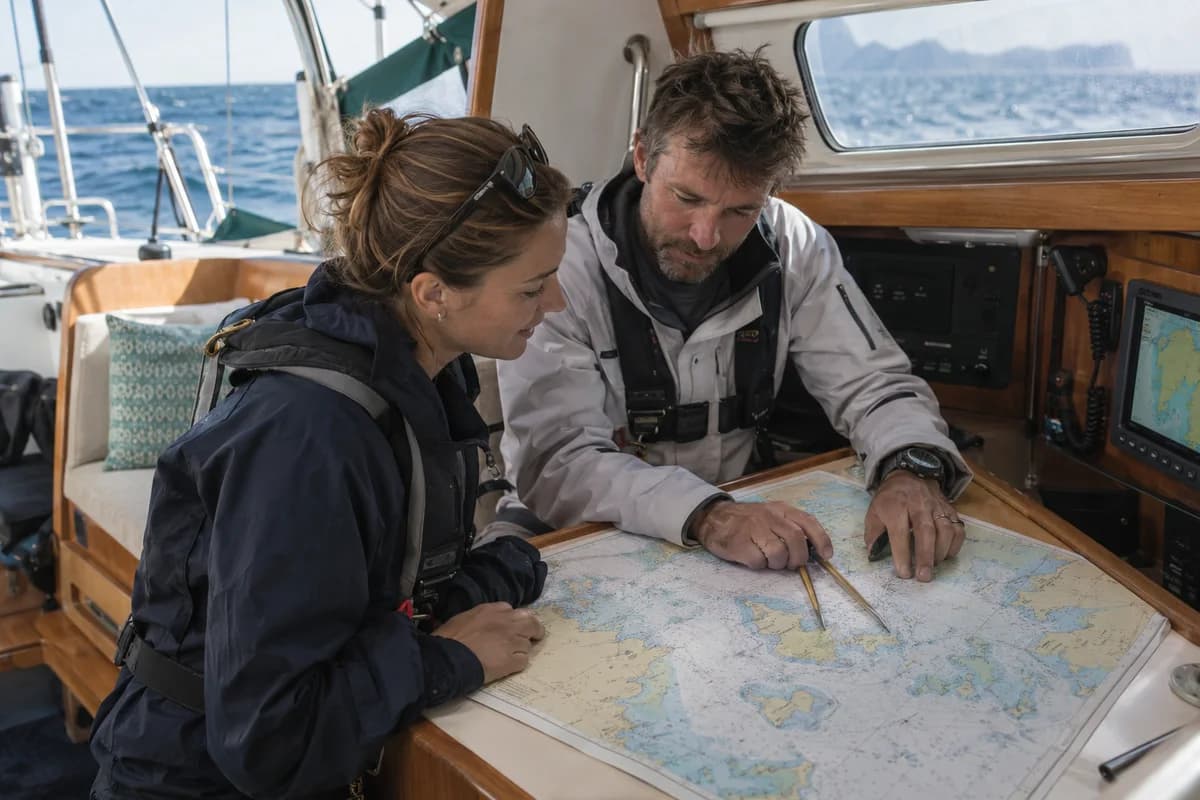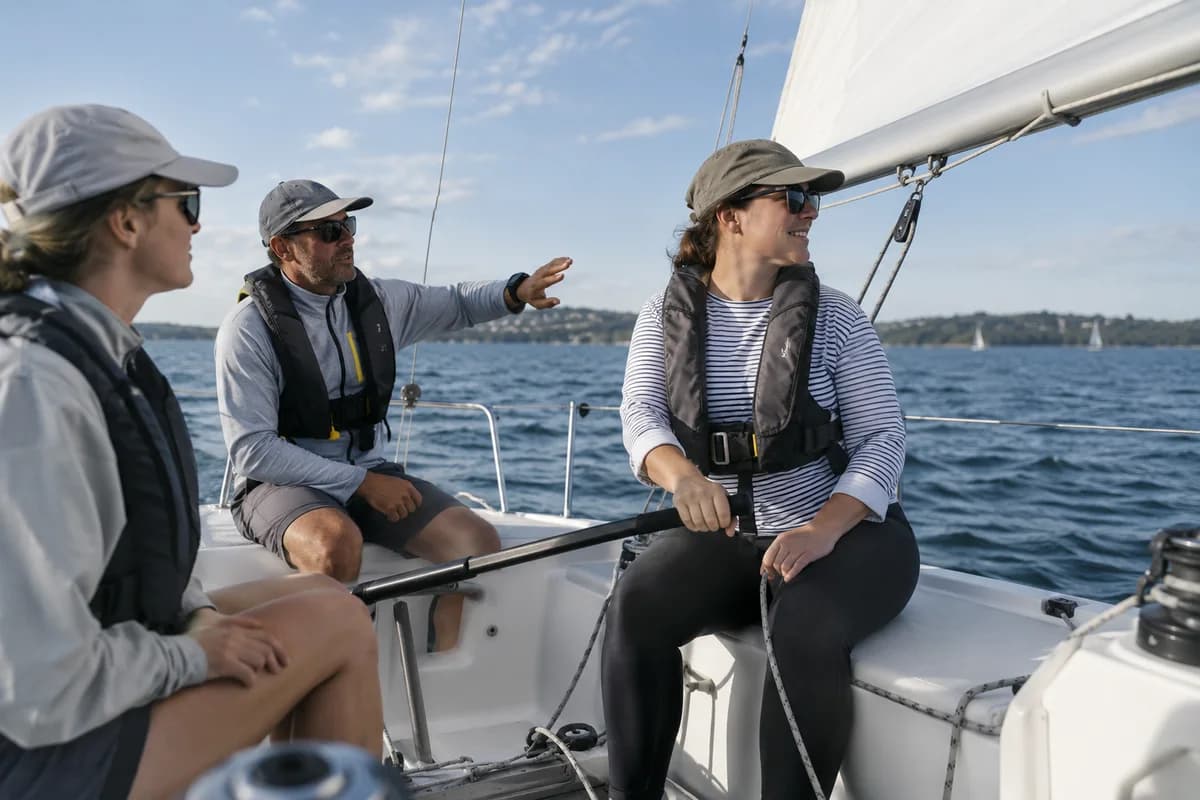
Canberra sailing enquiries are often about regular participation: finding a club, learning on a manageable boat or maintaining equipment between sessions. Start with the activity you want on the local lake rather than importing the assumptions of a coastal yacht holiday.
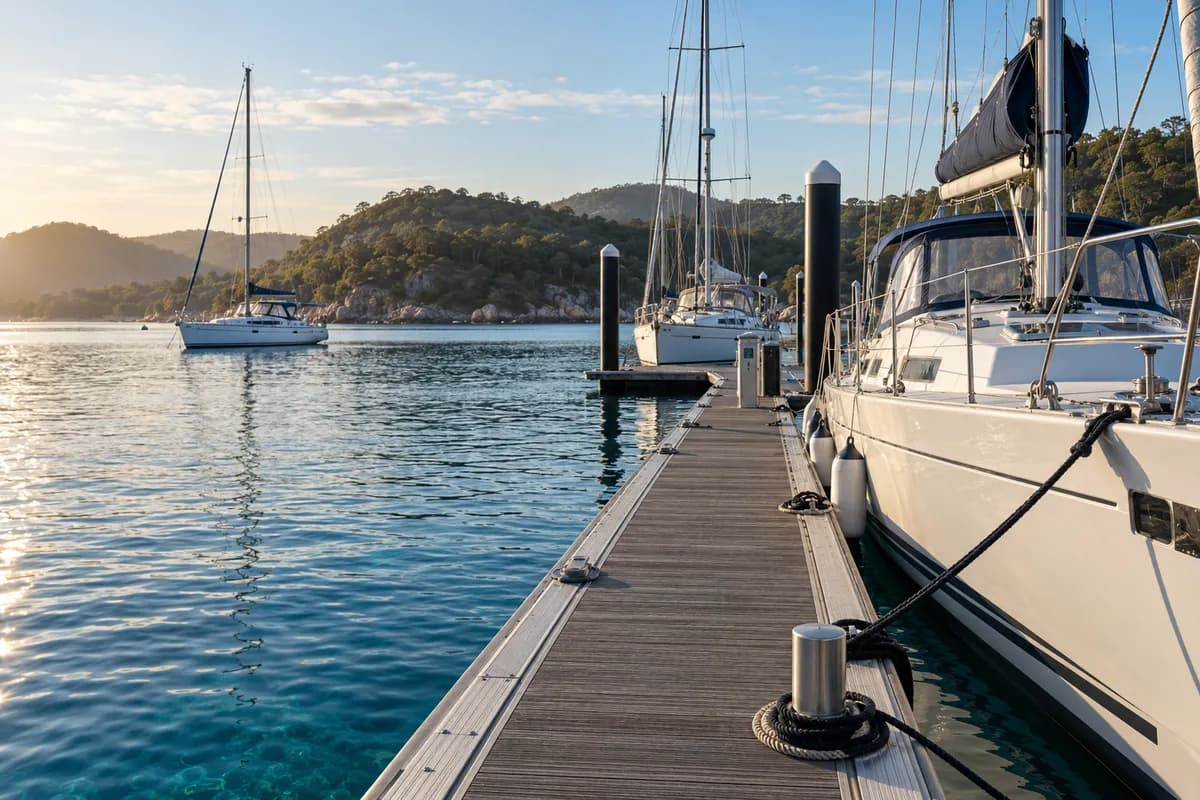
Find a repeatable lake-based activity
Ask a club or school how beginners get started, what boats are used and whether the programme provides a route to regular sailing. Clarify the meeting point and what equipment is supplied. If you are returning after time away, explain the experience you have and what you would like to practise. A local routine can make learning easier to sustain. Check the actual calendar before joining so the sessions you want are available at times you can attend.
Separate local practice from coastal ambitions
Lake sailing and a future coastal charter can be part of the same learning journey, but they are not identical experiences. Tell the training provider about both goals and ask which skills its programme develops. If you plan to travel for a later course or charter, use the appropriate regional and category guides to prepare that separate enquiry. Do not assume one certificate or a familiar local boat resolves every requirement of another operator or a different sailing environment.
Think about storage and transport early
For a small boat, ask where equipment can be stored, how access works and who is responsible for launching arrangements. If a trailer or repair is involved, give the supplier the actual boat and equipment details. Ask whether work is performed locally, at a workshop or through another service base. Include the regular journey from home in the decision. A boat that is straightforward to access and prepare is more likely to support the weekly sailing habit you wanted in the first place.
Check the lake’s current information
The National Capital Authority publishes information about Lake Burley Griffin, including links to lake use and water-quality information. Check current conditions and applicable arrangements for the activity you intend rather than relying on an old event notice. This page is an introduction to service and learning enquiries, not confirmation that a particular lake activity is currently available. Select ACT in the directory, then ask the listed business or club about the exact programme, access and timing.
Treat lake sailing as its own local routine
For Canberra sailing enquiries, begin with the club, course meeting point and type of boat involved. Ask how a newcomer joins the activity, what equipment is supplied and what continuing opportunities exist. Lake Burley Griffin has its own managing authority; use National Capital Authority information for the lake rather than assuming a coastal boating page answers the same questions. A regular local sailing routine can be valuable without pretending it covers every aspect of coastal cruising. Tell an instructor if your longer-term ambitions extend beyond the lake so the learning pathway can be discussed honestly.
Separate local learning from work on a coastal boat
Some ACT residents keep a yacht elsewhere. If that describes you, put the boat’s actual location first when contacting marine trades, and explain that you live in Canberra. Search the state where the work will occur as well as any relevant local suppliers. Ask about travel, deliveries and whether an authorised person can provide access while you are away. A business located in the ACT is not automatically the appropriate provider for a coastal installation, just as a coastal school is not automatically the most practical place for your first regular lesson. Match each enquiry to the place and purpose.
Get to know the shore support.
Read the places and facilities that matter to your plans. These passages come from YouSail’s published regional guides and destination records.
Canberra: Sailing context
Lake Burley Griffin is an artificial, central-City waterbody cut into the Molonglo River corridor and framed by Canberra’s civic landmarks. From the water it reads as a long, sheltered basin with a sequence of named bays, peninsulas and causeways rather than open coastline: East and West lakes separated by the central Basin and crossed by a string of road bridges. The lake’s constructed shorelines, parklands and boathouses concentrate launching and social boating activity at a handful of predictable points, while much of the rim remains public parkland. That built, urban setting makes the lake unusually accessible for trailer sailors, dinghies, keelboats and small cruisers, but its inland position also produces highly localised and changeable winds.
Sailing here is mostly day and short-cruise activity rather than offshore passagemaking. The water suits dinghies, trailerable keelboats, sportsboats and modest keel cruisers; club racing is well established and there are regular Learn-to-Sail and community programs. Preparation emphasises local knowledge—where the wind funnels, where gusts form off ridgelines and where wake and rowing lanes will force tactical choices—rather than offshore seamanship. Compared with coastal sailing, passages are short and easily aborted ashore, but the lake’s shallow margins, submerged structures and seasonal water-quality issues raise different practical constraints. The lake is both forgiving and exacting: sheltered when easterlies prevail and surprisingly lively when strong westerlies or a thermal sea-breeze swing through the Molonglo corridor.
Cruisers who arrive from outside Canberra will typically trailer their boats in or join clubs that store and launch locally; overnight stays on the water are possible but constrained by permit requirements and limited marina space. The lake connects with nearby recreational reservoirs and rivers in a planning sense—Googong Reservoir, Lake Ginninderra and local rowing sheds share the same recreational culture—but it should be treated as a discrete inland sailing ground with its own rules, mooring arrangements and patterns of use.
Read the full YouSail source ↗ · Updated 21/08/2026
Canberra: Shore access and facilities
Lake Burley Griffin’s berthing and stopping options are concentrated and managed. There are no large commercial marinas like coastal capitals; instead the lake supports club facilities, a small number of visitor berths, dedicated moorings controlled by the National Capital Authority (NCA) and publicly accessible launching ramps. Canberra Yacht Club at Yarralumla/Lotus Bay is the main centre for trailer keelboats, dinghy fleets and racing administration. The club maintains slipways, launching points and shore storage arrangements for members; visitor arrangements can be limited and are best checked with the club directly.
Moorings in the lake require permits from the NCA. The NCA issues and enforces conditions for private moorings and has published mooring guidelines and an application process. Moorings are not freely replaceable: if you plan to leave a vessel on a mooring long-term you must hold the appropriate permit and follow maintenance and removal requirements set by the NCA. Several sheltered bays contain ad-hoc private moorings and registration is the norm rather than the exception. Public boat ramps (for launching trailer boats) are located at key points such as Yarralumla and Weston Park; these ramps suit local trailers and are the primary route for visiting boats.
Visitor berthing in the central city foreshore is limited. Commercial operators such as shared-electric-boat hire services run short-term on-water pickups from Kingston and Regatta Point but do not provide conventional marina berths for private yachts. The lake’s overall character is low-density berthing: expect that overnight berth availability is limited, that formal visitor moorings are controlled, and that shore-side facilities for cruisers (such as fuel and full-service chandleries) are much more modest than a coastal capital. Heavy maintenance, haul-out and larger slips are not generally available on the lake; vessels needing significant work will normally be trailered to larger marine yards outside the ACT.
Read the full YouSail source ↗ · Updated 21/08/2026
Lake Burley Griffin: Sailing context
Lake Burley Griffin sits at the geographic and ceremonial heart of Australia’s national capital. From the water the lake reads very differently to the city’s streets: low, expansive shorelines, formal embankments and a string of parkland and civic vistas rather than rugged coastline. The lake is artificial, shallow in most places, and bounded by man‑made edges, bridges and causeways that make navigation straightforward in good visibility but demand respect for local rules, restricted zones and the heavy recreational use it receives.
Sailing here is mostly recreational and day‑cruise oriented. The lake is popular for dinghies, trailer sailers, keelboats belonging to local clubs, catamarans, and windsurfers; larger cruising yachts visit rarely because of the lake’s limited depth and the absence of overnight visitor marinas intended for big coastal craft. Expect a mix of short bursts of enjoyable sailing when the breeze sets in and long periods of motoring or drifting when winds are light: the lake’s sheltered central basins buffer much of the swell but provide energetic gusts in narrow channels and around headlands. Lake Burley Griffin suits club racing, training, junior sailing programs and relaxed weekend sails rather than ocean passages.
Preparation for the lake is practical and local. Vessel owners should confirm mooring and permit rules, be ready for shallow sections away from the central basins, and carry suitable fenders if rafting alongside public jetties and club pontoons. Because the lake is surrounded by civic parks and busy pedestrian paths, shore operations—crew changes, launching and retrieving trailers—often take longer than expected and are best done at established ramps and club facilities. The lake also links directly to local water sports, rowing and dragon‑boat activity, which affects where and when you can navigate; this makes a modest degree of local familiarity and communication with clubs and the National Capital Authority valuable before setting out.
Read the full YouSail source ↗ · Updated 21/08/2026
Lake Burley Griffin: Shore access and facilities
Club pontoons and public jetties
Facilities for berthing and docking on Lake Burley Griffin are concentrated around club pontoons and a handful of public jetties. The Canberra Yacht Club and other local sailing organisations provide the principal suburban bases: member pontoons, visitor berths, training ramps and associated rigging areas are where most visiting boats tie up for short stays, attend events or join organised racing and training. Public jetties and day docks are distributed around the West and East Basins and close to the Central Basin promenades, but these are primarily intended for short visits, launching and retrieval, and public access rather than long‑term berthing.
Permanent moorings and permits
Permanent and designated moorings in the lake are limited and managed by the National Capital Authority in coordination with local clubs. A mooring permit is generally required to occupy a public mooring; some moorings are reserved for club members or specific uses. Visitors should not assume availability—advance enquiries and bookings are prudent, particularly around major events. Because the lake’s margins are relatively shallow and contain submerged limestone shelves, many moorings and jetties are sized for trailer boats, dinghies and smaller keelboats rather than for deep‑keeled or heavy cruising yachts.
Launching, ramps and trailer access
Boat launching is straightforward at a small number of public ramps and club slipways. These facilities are designed for trailer sailers, motorboats and rowing shells rather than large, wide‑beamed cruisers. Trailer parking at launch sites is controlled and can become scarce during regattas, public holidays or major city events; plan launches outside peak event times when possible. If you rely on a trailer, check local club noticeboards or the relevant agency for temporary restrictions before towing in.
Fuel, provisioning and shore services
Fueling options on the lake itself are minimal to non‑existent; most visiting skippers top up at pumps onshore in Canberra or carry spare fuel in approved containers when required. Chandlery, basic spare parts and small mechanical services are available in the city rather than at the water’s edge. Expect to travel off the lake for substantial provisioning, engine parts, sails and specialist services. For routine short visits, the clubrooms and nearby shops provide adequate provisioning for day sailing and weekend outings.
Maintenance, haul‑out and repairs
Basic maintenance and mechanical services exist in Canberra but are concentrated away from the lake edge. The lake supports limited dry‑work options via club facilities and ACT Government slipways; these suit small craft, trailer boats and light maintenance. Extensive refit work, complex engine repairs, sailmaking or large‑scale rigging work will generally require transport to larger coastal facilities with full haul‑out and hardstand capacity. If your boat needs significant work during a visit, plan to relocate it to a specialist yard or schedule maintenance before arrival.
Waste, sullage and environmental services
Waste disposal and sullage points are available at some clubhouses and public boat facilities, but capacity and access vary. Clubs often provide bins and greywater disposal for members and visiting craft; however, quantities can be limited and some points are intended for small, short‑term use only. Skippers planning longer stays should confirm disposal arrangements with the club or lake management authority in advance and avoid informal discharge anywhere on the lake.
Practical planning advice
- If you need a berth: contact the Canberra Yacht Club or other local sailing organisations before travelling; visitor berths are typically the most reliable option. Reserve early around regatta dates and public holidays.
- Mooring use: do not rely on finding a free public mooring on arrival—seek permission or a booking where required and respect club allocations.
- Trailer boats: expect straightforward launching gear but restricted overnight parking and limited ramp space during events. Have alternative launch plans.
- Fuel and spares: top up onshore in Canberra prior to launching; carry required spare parts and small tools aboard.
- Major repairs: arrange haul‑out off the lake if you anticipate anything beyond basic servicing; local contractors can handle minor mechanical and electrical work but not large refits.
- Waste management: confirm sullage and waste disposal arrangements with the club or authority before an extended stay.
How facilities shape itineraries
Because fixed infrastructure is modest and oriented to small craft and club activity, Lake Burley Griffin works best for day sailing, club racing, training and weekend cruising by trailer sailers and small keelboats. Visiting crews planning to use the lake as a base for longer cruising or for major maintenance should treat the Canberra shore as the supply and service point rather than expecting full marina‑style support at the waterline. Advance contact with clubs and the lake manager, clear plans for fuel and waste, and flexibility around ramp access and mooring availability make visits straightforward and enjoyable.
Read the full YouSail source ↗ · Updated 21/08/2026
Three steps to a clearer decision.
Choose the services and access you need in this region.
Check current local notices with the relevant boating authority.
Confirm availability and arrival arrangements directly with your provider.
Use the authority’s current information for requirements and notices. This guide was updated on .
Before you make the next move.
Open a question for practical advice to help with your next decision.
Can I start sailing in Canberra without owning a boat?
Ask local clubs and training providers whether their introductory activities supply boats and equipment. Confirm the particular programme, booking and costs; a general club listing does not establish that every activity includes a boat.
Where do I check Lake Burley Griffin information?
Use the National Capital Authority’s current lake pages, including its water-quality and lake-use information. Check the requirements for the activity you intend rather than assuming a previous event or visit describes today’s arrangements.
Does a ACT listing mean the provider will travel to my boat?
No. The state filter reflects the published business location. Send the exact berth, yard or town and ask the provider to confirm attendance, travel charges and access requirements for your particular job.
Which location should I use if I live in Canberra but keep a yacht in NSW?
For onboard work, begin with the boat’s NSW location and explain that you live in Canberra. Search the relevant service category and confirm attendance directly. Local ACT suppliers may still help with some enquiries, but the installation or assessment location should drive the practical booking.
Will local lake sailing cover everything needed for a later coastal goal?
Do not assume that one setting or course covers every future activity. Tell the instructor what you want to do later and ask how your local learning fits a broader pathway. A regular lake-based routine can provide useful practice while further training and experience are planned for a different boat or operating environment.
Which parts of Australian Capital Territory does this guide help me explore?
Start with Canberra, Lake Burley Griffin, Inland-to-coastal learning plans. The regional source notes explain selected local service areas; linked business profiles describe published locations and services.
Does a business location confirm its operating area?
No. A published business address is a starting point for an enquiry. Ask the provider to confirm its service area, access arrangements and any departure point for your booking.