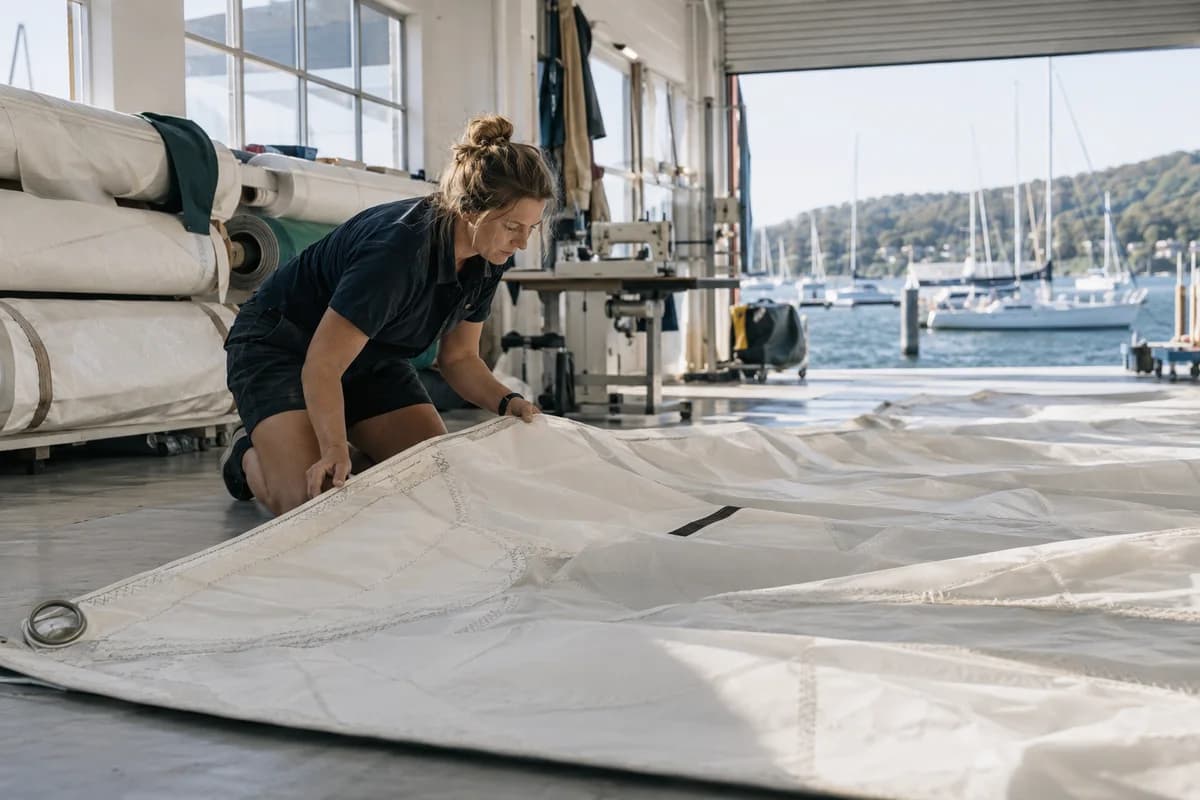
A cruising main and a race-day headsail solve different problems. Find sailmakers to talk through your boat, sailing habits and the balance of handling, durability and performance you want.

Describe the sailing before the sail
A useful sailmaking brief begins with the boat's life on the water. Explain whether you cruise with family, race with a regular crew or sail mostly short-handed. Describe the conditions you normally encounter and the manoeuvres that feel difficult. A new sail should support those priorities, not merely fill the same space as the old one. Bring photographs of the boat sailing if you have them, along with existing sail details and rig information. The sailmaker can then discuss shape, handling and construction in the context of your actual use rather than an abstract idea of the perfect sail.
Make measuring part of the agreement
Boat model information is a useful reference, but it does not replace checking the installed rig and fittings. Masts, furlers, tracks and deck arrangements can change during a vessel's life. Ask who will take the final measurements and how compatibility will be confirmed. For a mainsail, discuss reefing, battens and the way the sail is hoisted and stored. For a headsail, explain the furling or attachment arrangement and the existing sheeting setup. If you are supplying measurements yourself, obtain clear instructions and ask the loft to identify anything that cannot be resolved reliably without a visit to the boat.
Compare construction against your priorities
Different materials and construction approaches involve trade-offs in handling, shape retention, durability, storage and price. Ask the sailmaker to explain why its proposed option suits your sailing rather than choosing from a label alone. A performance-focused crew may accept different compromises from an owner who values simple handling and easy repair while cruising. Discuss how the sail will be used when the breeze changes and what care it needs between outings. A good quotation makes the proposed construction and included features clear enough that you can compare alternatives without assuming that two sails with similar names are equivalent.
Include the details around delivery
The sail itself is only part of the purchase. Clarify whether the price includes measuring, delivery, fitting, sail bags, numbers or other specified features. Ask whether a first hoist or an on-water setup session is available and what support is offered if an adjustment is needed. Get a realistic production timetable, particularly if you have a regatta or departure date in mind. Avoid scheduling the first use for an important trip immediately after the expected delivery. Time for fitting and a familiarisation sail gives you a chance to resolve questions while the loft is still close at hand.
Keep the loft relationship working
At handover, ask for the care guidance appropriate to the sail and keep a record of its specification. Make sure everyone who handles it understands the features that differ from the old sail. If something does not behave as expected, contact the loft with useful photographs and a clear description of the conditions. Periodic professional assessment can also help you decide when repairs or adjustments are worthwhile. North Sails' service guidance, for example, treats inspection and repair as part of sail ownership. Your own sailmaker's instructions should guide the care of the product it has supplied to your boat.
Make the first enquiry count.
You want a sail that is easier for a small crew to handle. Explain the boat, current equipment and the situations that feel awkward before discussing materials. Ask the loft which measurements it takes and how the proposal addresses your actual handling routine.
What a useful quote should settle
Compare design brief, measurements, fittings, construction choices, delivery and any on-boat fitting or follow-up included.
How to compare marine service quotes →Which conversation do you need?
Start with the situation that describes your job. These are different enquiry briefs, so ask the provider to confirm the scope that fits yours.
New sailing brief
The boat or regular crew has different needs.
What changes should the proposed sail actually deliver?
Replacement sail
You want to address known limitations.
Which aspects of the old sail should not be copied?
Assessment before purchase
You are unsure whether a new sail is needed.
What can a condition or on-boat assessment establish first?
Three steps to a clearer decision.
What changes should the proposed sail actually deliver?
Which aspects of the old sail should not be copied?
What can a condition or on-boat assessment establish first?
Before you make the next move.
Do I need a racing sail to improve performance?
Describe your goals to the sailmaker rather than starting with a label. Handling, durability, shape and the sailing you actually do may lead to different proposals. Ask the loft to explain its recommendation in those terms.
Can the loft use the dimensions of my old sail?
It may use them as a reference, but ask whether they represent the desired fit and current rig. A replacement is an opportunity to discuss problems rather than automatically copying them.
Sailmaker: enquiry checklist
Use this to prepare your first enquiry. Print a copy to keep with your notes.
0 of 5 ready · Checks reset when you leave this page.
Use the guidance relevant to your equipment, location and intended use.
North Sails: sail care and repair ↗