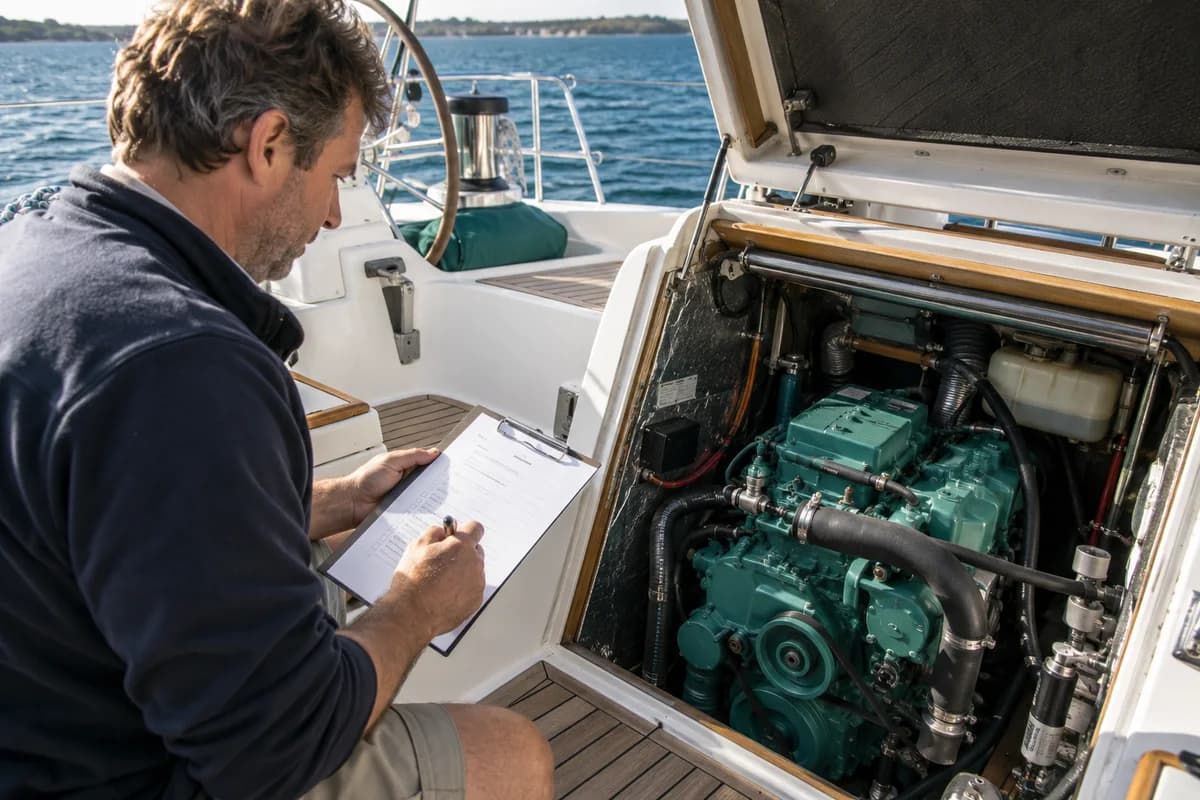
A good handover explains what was done, what was checked and what remains unresolved. It helps the owner use the result appropriately and gives the next service provider a reliable starting point. Agree the expected documentation while the job is being scoped, rather than asking for everything after the contractor has left.

Return to the agreed scope
Have the accepted quote and any approved changes available when the work is handed over. Ask the provider to explain completed items, exclusions and anything postponed. An invoice can record charges without describing the whole technical outcome. If the job changed after investigation, connect the final work to the revised approval. This is not an invitation to perform an amateur inspection outside your knowledge. It is a way to understand whether the requested work, agreed changes and delivered record describe the same job.
Ask for evidence appropriate to the work
The useful record depends on the service. An equipment installation may need identification, configuration and updated diagrams; a repair may benefit from progress photographs of areas now concealed; a sail job may need a clear description of the work and care advice. Ask what the provider normally supplies and what should be requested separately. Do not demand irrelevant documents because another trade produced them. The aim is a record that explains the actual work and can support future maintenance or a follow-up conversation.
Understand the demonstration
For equipment you will operate, ask the provider to demonstrate the agreed functions and explain relevant instructions. Arrange for the regular user to attend where possible. Write down unfamiliar terms and ask for clarification rather than pretending to understand. Keep operational familiarisation within the provider’s scope and the manufacturer’s guidance. A device switching on is not necessarily a demonstration of every function agreed in the proposal. Conversely, a limited service visit should not be treated as commissioning of systems that were never included.
Make unresolved findings explicit
Ask whether the provider identified anything requiring further investigation or another specialist. Record who should be contacted and what information should be passed on. Keep completed work and recommendations in separate lists. A recommendation is not a repair, and an observation does not automatically establish a diagnosis. If the provider identifies an operating limitation, ask it to explain the practical implication directly. Resolve uncertainty before arranging the boat’s next use, using the relevant professional advice rather than an assumption based on the job appearing finished.
File the record for the next person
Store the invoice, work description, supplied manuals and relevant correspondence together under a date and equipment or service name. Record model and serial information where provided. If diagrams or settings changed, identify which version is current so an old file is not mistaken for the installed arrangement. Share the location of these records with the person who manages the boat. A simple, searchable folder can be more useful than an elaborate maintenance system that nobody updates. The important result is that the next conversation starts with evidence rather than a recollection of who visited last year.
Arrange the follow-up before everyone leaves
Ask who should receive a question after the job and what information the provider wants supplied. Save a job reference and the appropriate contact details. If there is a scheduled follow-up or a recommendation for later attention, record the trigger or agreed timing as the provider describes it. Do not invent a service interval from general advice about a different installation. The actual equipment, work and professional recommendations should shape the next action.
If a concern appears later, describe the observation, when it occurred and any relevant changes since handover. Include the original record rather than asking the provider to identify the job from memory. Keep the message factual and separate the symptom from your theory about its cause. This gives the provider a useful starting point and makes it easier to decide whether the concern relates to completed work or requires a different assessment.
Make shared ownership and remote handover workable
When several people use the boat, agree who receives the technical record and who makes sure the regular operators understand the handover. Forwarding an invoice to every owner is not the same as explaining changed equipment or an outstanding recommendation. Keep one current set of documents and identify where it lives. If access details or account ownership are involved, arrange those directly with the authorised people and provider.
For remote owners, ask whether a representative can attend, what can be documented and whether a later call is suitable for questions. Do not ask a representative to approve technical matters beyond their role. Give the provider a clear account of that person’s authority. A good remote handover preserves the same distinctions as an in-person one: work completed, evidence supplied, use explained and further decisions recorded.
Compare your starting points.
Routine service
Work follows an agreed maintenance scope.
What was completed and what was observed?
New installation
Equipment or configuration has changed.
What documentation and demonstration show the agreed outcome?
Investigative work
The purpose was to understand a problem.
What is established, what remains uncertain and what is the next step?
What this looks like in practice.
An illustrative owner commissions an electronics replacement. At handover, the installer demonstrates the agreed functions and identifies one unrelated issue outside scope. The owner saves the configuration record, manuals and invoice, then records the separate recommendation as an open item. Future service enquiries can now distinguish the completed installation from the unresolved concern.
Three steps to a clearer decision.
Compare completion with the accepted scope.
Save relevant equipment and work records.
Separate recommendations from completed repairs.
Take this to the conversation.
- Compare completion with the accepted scope.
- Save relevant equipment and work records.
- Separate recommendations from completed repairs.
- Confirm the follow-up contact and next action.
A useful first message.
Replace the bracketed details with your own. Leave unknown information marked as unknown.
Before we close the job, please confirm the completed scope and approved changes, the checks performed, the records supplied and any outstanding findings. Could we also arrange a handover for the person who will use the equipment and confirm how follow-up questions should be raised?
Before you make the next move.
Open a question for practical advice to help with your next decision.
Is the invoice enough?
Sometimes it contains the necessary detail, but not always. Ask whether separate findings, diagrams, settings or care information are relevant to the particular work.
What if I cannot attend handover?
Arrange an alternative with the provider, such as an authorised person attending and a later explanation. Agree how questions will be answered rather than relying on an unexplained bundle of documents.