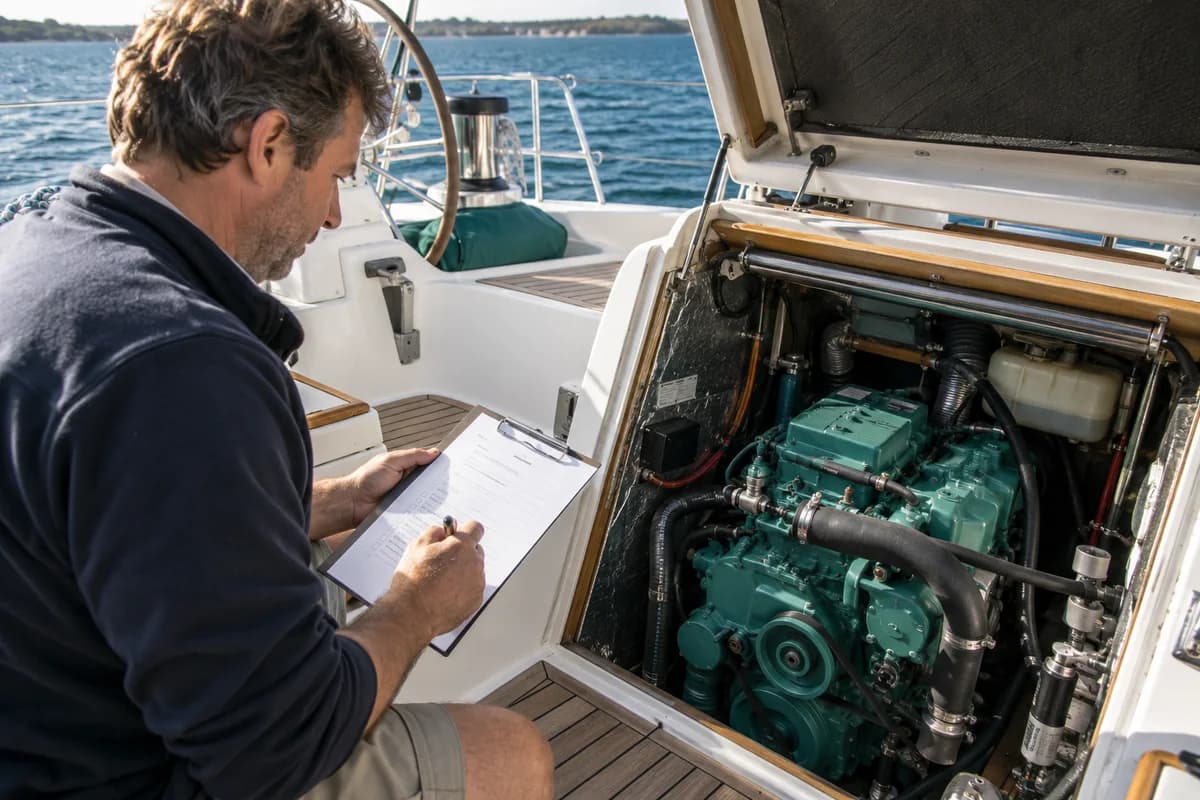
An outboard might power your whole day or just the last few metres to shore. Find service providers for maintenance, troubleshooting and repairs for the engine on your transom.

Identify the engine before the appointment
Small outboards can look similar while requiring different parts and procedures. Give the service business the make, model, serial number and engine type, along with any records you have. Explain whether the motor powers a tender, a dinghy or the sailing boat itself. The way it is used helps put symptoms into context. If starting or running behaviour has changed, describe when the problem occurs and what happened beforehand. Do not assume that an engine which runs briefly at home will behave the same way under its normal workload. Accurate observations are more useful than an owner-supplied diagnosis.
Choose a workable service arrangement
Ask whether the provider accepts the engine at a workshop, attends the boat or offers collection. For a motor fitted to a sailing boat, removal and transport may be a separate task. Follow the manufacturer's handling and transport instructions and ask the service business for guidance if you are unsure. Confirm what needs to accompany the engine, such as associated controls or other equipment relevant to the reported fault. A workshop visit is easier to plan when you know the drop-off process, expected assessment timing and how the business will contact you before undertaking additional work.
Define the service and the fault separately
A routine outboard service should be explained in terms of the particular model and its maintenance requirements. If you also need a running problem investigated, say so when booking rather than assuming it is included. Ask whether the business has experience with your engine range and access to the relevant parts. Clarify diagnostic charges, the approval process and whether the quoted timing depends on parts arriving. For an older motor, discuss the purpose of the work: dependable tender use, preparation for sale or an assessment of whether a larger repair is worthwhile. That context helps frame the options.
Think about the rest of the setup
An outboard operates with more than the engine unit alone. Controls, mounting, fuel arrangements and the vessel's use may be relevant to the concern you report. Tell the technician about changes to the installation or equipment, and ask which associated items should be assessed. Do not make adjustments based on a general guide when the problem needs diagnosis. If a different provider installed the motor, gather any available paperwork. The aim is to give the mechanic enough context to distinguish an engine issue from another part of the setup, rather than repeatedly servicing the motor without addressing the original problem.
Collect the engine with a clear record
Review the completed work, any test findings and the recommendations before taking the engine away. Keep the invoice, parts information and model details together. Ask how the manufacturer recommends caring for the motor between the kinds of outings you actually make, especially if it spends long periods unused. Arrange time to become familiar with the serviced setup before depending on it for an important journey. If the original symptom returns, report the circumstances promptly and refer to the work record. A clear history makes follow-up more useful than describing the issue again as though nothing has previously been checked.
Make the first enquiry count.
An outboard used for a tender may have a different service routine from one used frequently elsewhere. Tell the workshop how it is used, stored and transported. Ask whether it should be brought in with any associated equipment and what preparation the business requires.
What a useful quote should settle
Compare inspection, scheduled service, diagnosis of reported symptoms, collection arrangements and the handover explanation.
How to compare marine service quotes →Which conversation do you need?
Start with the situation that describes your job. These are different enquiry briefs, so ask the provider to confirm the scope that fits yours.
Workshop visit
The equipment can be brought to the provider.
Which associated items and preparation are required?
Installation concern
The problem may involve more than the engine.
Does the full arrangement need assessment?
Routine maintenance
You want the agreed work documented.
What service record and follow-up guidance will be supplied?
Three steps to a clearer decision.
Which associated items and preparation are required?
Does the full arrangement need assessment?
What service record and follow-up guidance will be supplied?
Before you make the next move.
Should I bring the fuel tank or controls?
Ask the workshop which associated equipment it needs for the particular problem. Describe the full setup rather than assuming the engine alone is enough. Follow its transport and preparation instructions.
Can I book only a quick check?
Explain what you need to establish and let the provider define a suitable scope. A brief check may not answer a fault-finding or maintenance question. Agree the deliverable so you understand what the appointment will and will not resolve.
Outboard service: enquiry checklist
Use this to prepare your first enquiry. Print a copy to keep with your notes.
0 of 5 ready · Checks reset when you leave this page.