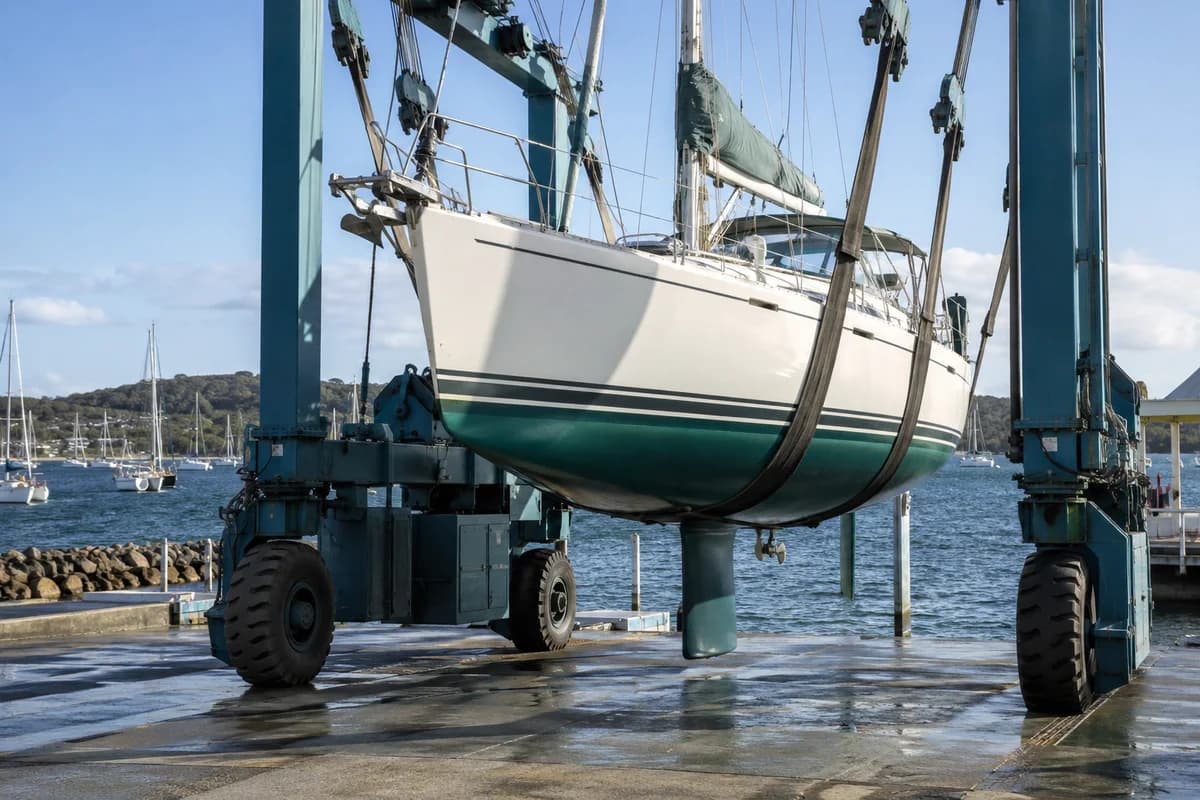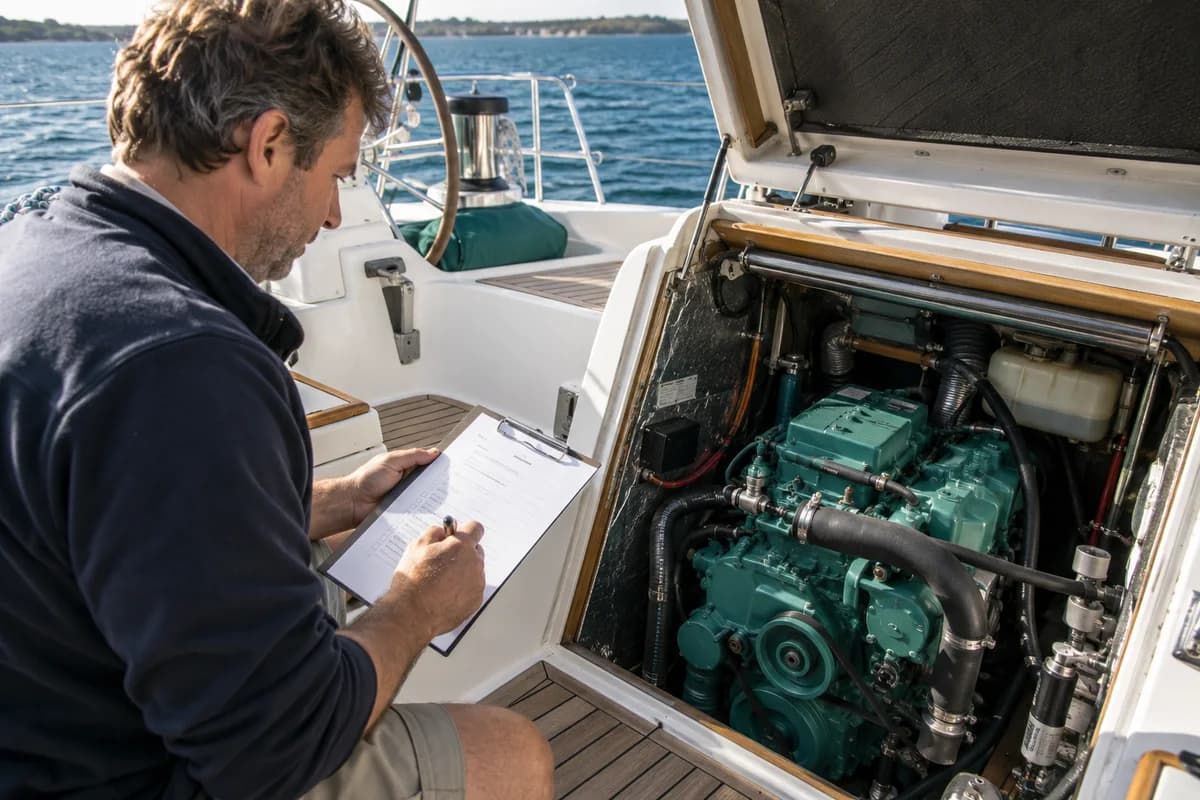
The most useful marine-service decision is often the one made before a contractor arrives. Define the problem, identify the right expertise and agree how the result will be assessed. This guide connects the directory’s specialist categories with a practical process for owners who need work done without losing track of scope, access and follow-up.

Start with the problem you can actually describe
A useful marine-service enquiry begins with an observation or an intended outcome. “The cabin light stops working when this switch is used” gives a provider a different starting point from “I need a new battery”. The first describes evidence; the second may be an untested diagnosis. Explain what happened, when you noticed it, what changed beforehand and what you have already been told. If you are planning an improvement rather than responding to a fault, describe the result you want and the limitations of the present arrangement.
Keep the opening message short enough to understand, then attach organised supporting information. Include the boat, equipment identification where known, location and a realistic time frame. Say whether the vessel is afloat or ashore and whether it can be accessed while you are away. A provider can use those details to decide whether it offers the right service, needs further information or recommends another specialist. The first conversation should establish a sensible next step; it does not have to produce a complete diagnosis or final price from photographs alone.
Find the right trade before comparing prices
Marine work crosses boundaries. A problem that appears at an electronic display may involve equipment, connections or another part of the installation. A damaged fitting may raise questions about the structure beneath it. Describe the issue to the first suitable provider and ask which part it can assess. Do not assume a broad directory category means every listed business handles every model, material or kind of job. The category is a way to begin a shortlist, while the provider confirms its actual scope.
Ask whether the work needs one business, a lead contractor coordinating others or several independently booked specialists. Those arrangements carry different communication responsibilities. If each trade is booked separately, identify who decides the sequence and who confirms that the boat is ready for the next stage. When a provider recommends another specialist, ask what findings should be passed on. This reduces the chance of paying several people to repeat the same initial investigation or, worse, assuming that somebody else has already checked a critical part of the job.
Build an evidence pack the provider can use
For equipment work, collect model information, available manuals, previous service records and photographs taken without exposing yourself to unsafe equipment or access. For a repair, show the overall location as well as the close-up concern. A tightly cropped image can hide the context needed to understand how an item is installed. Label the photographs in ordinary language and distinguish what you know from what you suspect. A date and a short explanation can make an image much more useful.
For intermittent problems, prepare a timeline of observations rather than attempting to recreate the fault in unsafe circumstances. Record the conditions in which it was noticed and whether the behaviour changed after other work. Include earlier professional findings if you have them, even when they did not resolve the issue. Keep documents in a small, coherent set rather than forwarding a long email chain without explanation. The provider should be able to see the current question, relevant history and requested outcome without reconstructing the entire ownership story.
Separate diagnosis, maintenance and improvement
These are different jobs even when they concern the same equipment. Scheduled maintenance follows a defined scope. Diagnosis investigates a problem whose cause may not yet be known. An improvement changes the boat to meet a new requirement. Ask which type of appointment the provider is proposing and what you will receive from it. A diagnostic visit may lead to a later repair proposal; it should not be mistaken for a promise that the problem will be fixed within the initial allowance.
When a maintenance visit reveals additional concerns, ask the provider to separate the planned service from proposed extra work. For an upgrade, request an explanation of what can be retained, what must change and which decisions depend on inspecting the existing installation. This distinction helps you compare quotes fairly and understand why a firm total may not be available at the first contact. A professional process can include uncertainty, provided the uncertainty is named and there is a clear point at which findings and further authorisation will be discussed.
Write a scope that describes the finished result
A scope should identify the work, included materials or equipment, access assumptions and the result to be handed over. “Upgrade electronics” leaves many questions unanswered. A clearer proposal names the agreed equipment, retained components, intended functions, setup work and documentation. For a repair, the scope might identify the area being investigated, the proposed work and any finishing or refitting that belongs to another stage. Ask the provider to explain unfamiliar terms before you accept the proposal.
Also record exclusions. They are not necessarily signs of a poor offer; they show where another decision or booking is needed. An installation may exclude unrelated faults in retained equipment. A yard booking may exclude a contractor’s labour. A cleaning service may exclude restoration of deteriorated surfaces. Knowing those boundaries prevents the most common comparison error: treating two different scopes as equivalent because both have a total at the bottom. Keep the accepted version available to everyone coordinating the job so later conversations refer to the same agreement.
Make access part of the quote
Tell the provider where the boat is and how it can be reached. Explain marina gates, yard arrangements, tender access or other practical constraints that apply. Ask the operator of the location about contractor procedures before confirming an appointment. A trade may be willing to attend a site while still needing permission, induction or a particular workspace for the proposed job. Resolve those arrangements between the relevant parties instead of assuming an address is enough.
Discuss whether equipment needs removal, whether the boat must be ashore and who will organise movements. If you cannot attend, agree who supplies access and who is authorised to answer questions or approve a change. Share a reliable contact method. Time lost waiting for a key, an access decision or a person able to authorise work can disrupt an otherwise well-planned appointment. Access is therefore part of the scope and schedule, not an administrative detail to discover after the technician arrives.
Compare quotes using the same questions
Put each proposal into a simple comparison: investigation, labour, equipment, travel, access, testing, handover and exclusions. Use only the rows relevant to the job. Where an item is unclear, ask rather than marking it as included. A lower figure may reflect a narrower scope, a different component or an assumption that the owner will arrange part of the work. Those differences can be reasonable, but they need to be visible before you choose.
Distinguish a quote for defined work from an estimate that depends on investigation or uncertain conditions. Ask how the provider explains that distinction and how it seeks approval for additional work. Record payment stages and the treatment of ordered materials in the provider’s written terms. This guide is a practical comparison method, not advice on interpreting a particular contract. If an agreement has consequences you do not understand, obtain appropriate advice. The editorial objective is to help you ask precise questions before a total price becomes the only basis for the decision.
Set a clear process for changes
Boats can reveal hidden problems once work begins. Before that happens, agree who is contacted, what evidence will be supplied and when work pauses for a decision. A useful change request explains the finding, the proposed response, the effect on cost or timing and what happens if the additional work is deferred. The owner should be able to connect the request to the original scope rather than being asked to approve a vague expansion.
Keep approvals in a form both parties can retrieve. If a decision is discussed by phone, ask for a written summary of what was agreed. Avoid giving several people conflicting authority to change the job. If a partner, manager or other representative may make decisions, explain that arrangement in advance. The purpose is not to make every conversation cumbersome. It is to prevent uncertainty about who approved which work and to keep the final invoice, completed scope and owner’s expectations aligned.
Sequence work around dependencies
Start by identifying which job enables another. Investigation may need to happen before parts are selected. Access work may need to precede a repair, while finishing may need to wait until the underlying work is complete. Ask each provider which dependencies affect its appointment and who must confirm that the previous stage is ready. A calendar with several trade names on it is not yet a coordinated plan.
Leave the schedule responsive to findings and actual supply information. Do not advertise a fixed completion date to your crew solely because the first contractor has a free morning. When a yard, marina and several providers are involved, keep one shared version of the relevant sequence and contacts. Update it when the scope changes. A modest job can still benefit from this discipline: the person fitting equipment should know when access will be available, and the person using the boat should know which checks remain before the work is considered complete by those responsible.
Choose replacement equipment around the whole installation
Before buying a replacement independently, ask who will confirm suitability and who accepts responsibility for the selection. Equipment that appears similar may differ in dimensions, connections, configuration or requirements elsewhere in the boat. Let the relevant specialist assess those questions. For electrical or other technical systems, a product page is not a design for the complete installation. The existing boat and intended use matter as much as the new item.
If you supply parts yourself, discuss the provider’s policy before ordering. Ask how an incorrect, delayed or incomplete item affects the appointment and which documentation should accompany it. Keep the product specification and purchase details. Where the provider supplies equipment, ask the proposal to identify the intended model or specification and how substitutions are agreed. This is particularly useful when availability changes during a project. The objective is an agreed installed result, rather than a collection of individually attractive products that nobody has confirmed will work together.
Plan handover before the job finishes
Ask what records and explanation will be included. The appropriate material depends on the work: a service description, inspection findings, equipment identification, updated diagrams, configuration details, progress photographs or care information may be useful. Agree what is relevant instead of requesting every possible document after completion. For equipment you will operate, arrange a demonstration of the agreed functions for the person who will actually use it.
At handover, compare the completed work with the accepted scope and approved changes. Ask the provider to distinguish completed items, observations and recommendations for further attention. Record any operating limitations it identifies and seek clarification directly. Keep unresolved issues visible rather than allowing them to disappear into a paid invoice. A useful handover gives you enough information to understand what the job achieved and what still needs another decision, without pretending that one service visit assessed every system aboard.
Keep a record that makes the next job easier
Store the accepted proposal, approvals, invoice and supplied technical documents together under the relevant date and equipment or service name. Record which diagram or configuration is current when something changes. If ownership or responsibility for the boat changes, a coherent record helps the next person understand the installation and maintenance history. It also reduces the amount of information a future technician must reconstruct from memory.
Keep your own observations separate from professional findings. A note that a symptom returned on a particular date is useful; rewriting that observation as a confirmed diagnosis is not. When following up, send the original job reference, a clear description of the concern and relevant new evidence. Ask how the provider wants to handle the next step. This makes a follow-up conversation specific and fair, while preserving the distinction between what was agreed, what was completed and what has happened since.
Choose a provider using evidence of fit
Use the directory to identify possible providers, then ask questions that establish fit for the actual job. Describe the vessel or equipment and ask whether the business works with that type of installation. If a particular qualification, authorisation or recognised status matters, ask where it can be verified through the relevant organisation. Do not infer it from a logo, an attractive profile or the fact that a business appears in search results. The published record is a starting point for contact, not an independent assessment of competence for every possible task.
Ask how the provider would approach the first stage and what information it needs from you. A clear explanation of scope, limitations and the next decision is more useful than a promise to do everything immediately. Consider communication and record-keeping alongside availability: you want to know how findings will be explained, who answers questions and what happens when the job cannot proceed as expected. Where a provider declines work outside its expertise, treat that as useful information about the boundary of its service rather than a reason to force the job into the wrong category.
Finally, compare like with like. A specialist diagnostic appointment, a routine service and a broad project-management proposal solve different problems. If you are unsure which you need, say so in the enquiry and ask the provider to explain its recommendation. Keep that explanation with the proposal. It gives you a basis for choosing the next step and a reference for later discussion, while leaving technical conclusions to the people who assess the actual boat.
Compare your starting points.
Investigate first
The cause or extent of a problem is not established.
What will the assessment deliver before repair work is approved?
Defined maintenance
An agreed service scope can be matched to the equipment and records.
What is included, and how are additional findings handled?
Coordinated upgrade
Several components, trades or locations need to work together.
Who manages dependencies, changes and the final handover?
What this looks like in practice.
Consider an illustrative owner planning an electronics change during a yard visit. The first enquiry describes the existing equipment and desired functions. The installer requests an inspection before confirming retained components. The owner then coordinates yard access, accepts a defined proposal and agrees a change process. At completion, the installer demonstrates the agreed functions and supplies the updated record. An unrelated finding is recorded as a separate follow-up item. The example shows a coordinated enquiry and handover process; it does not establish the technical solution or cost for another boat.
Three steps to a clearer decision.
Describe observations separately from suspected causes.
Collect the relevant equipment and service history.
Confirm the provider’s scope and access arrangements.
Take this to the conversation.
- Describe observations separately from suspected causes.
- Collect the relevant equipment and service history.
- Confirm the provider’s scope and access arrangements.
- Compare inclusions, exclusions and change approval.
- Agree handover records and follow-up responsibilities.
A useful first message.
Replace the bracketed details with your own. Leave unknown information marked as unknown.
Our boat is [vessel] at [location and access]. We need help with [observed problem or intended outcome]. Equipment details and relevant history are [attached or available]. Please advise the appropriate first appointment, information still needed, proposed scope and exclusions, approval process for additional work, and the records and handover included. Our preferred timing is [dates], with [flexibility].
Before you make the next move.
Open a question for practical advice to help with your next decision.
Can I get a firm price from photographs?
Sometimes a provider can quote a well-defined job remotely, but photographs may not establish access, hidden condition or system compatibility. Ask what remains uncertain and whether an assessment is needed before a firm proposal.
Should I buy the parts before booking the trade?
Discuss that first. Ask who confirms suitability, what the installer requires and how an incorrect or delayed part affects the appointment. A product purchase and an installation agreement are separate decisions.
Does a listing mean a business services my particular boat?
No. The directory reflects published service categories and locations. Confirm the provider’s current capability, equipment experience and travel area directly for your job.
How do I avoid an expanding work list?
Agree the original scope and a clear process for new findings. Ask for the reason, proposed response and cost or timing implications before approving a change. Keep deferred recommendations separate from authorised work.
Who updates a business record?
YouSail maintains the published business facts. Use the source correction link on a profile for changes to those facts. Sailing Directory’s editorial guidance is separate from a provider’s own description and commitments.