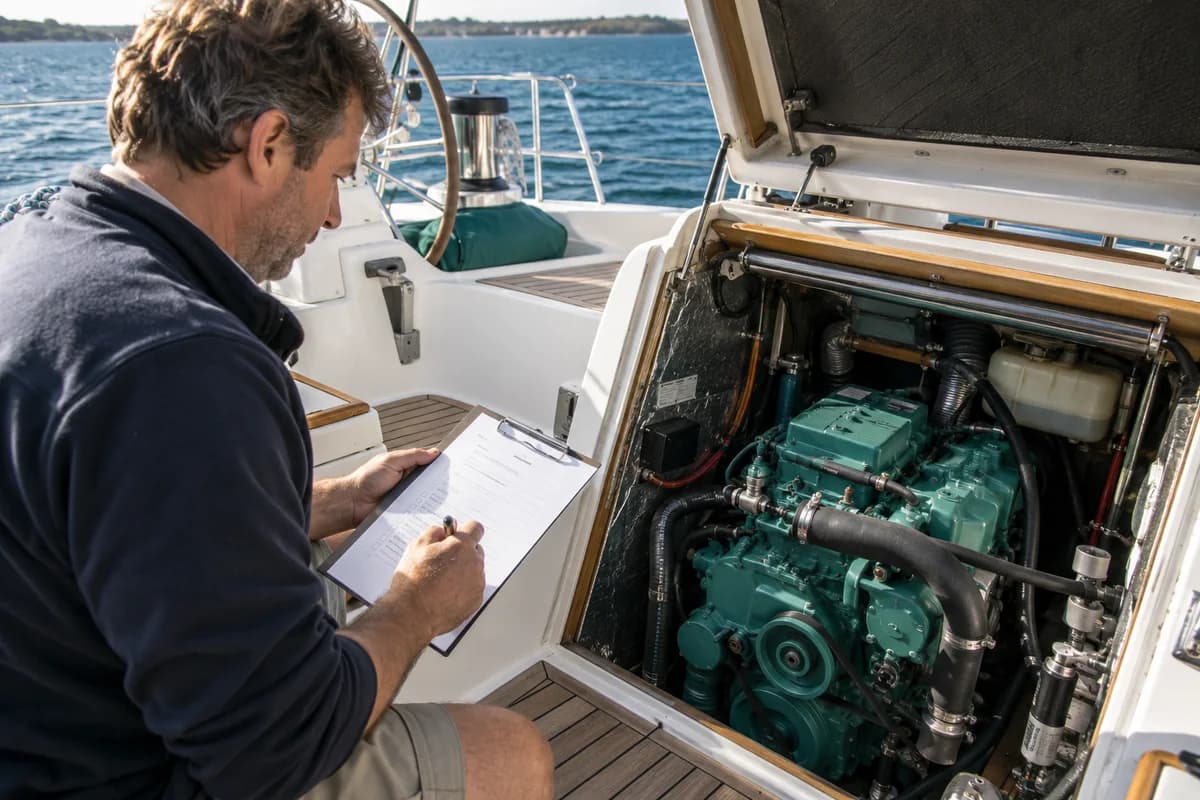
A reliable departure often starts below the companionway. Explore marine-engine businesses for routine servicing, fault finding and repairs suited to your engine and location.

Start with the engine's identity and symptoms
A marine service business can prepare more effectively when it knows the engine make, model and serial number before visiting. Add the recorded hours, service history and details of the installation where available. If something is wrong, describe what you observed and when it happens: starting, idling, manoeuvring or running under load. A short video or photograph may help, provided it was captured safely. Avoid replacing your observations with a guessed diagnosis. Several different problems can appear similar to an owner, and a useful description gives the technician room to investigate the actual cause.
Separate scheduled servicing from fault finding
A routine service follows the requirements relevant to the particular engine and its use. Investigating a recurring fault is a different task and may require additional time or testing. Make both needs clear when booking. Ask the business whether it works with your engine brand and whether the proposed visit includes diagnostics or only the scheduled service items. Manufacturer guidance, such as Yanmar's operation manuals, is model-specific; a generic annual service label does not tell you exactly what will be done. Request a written scope and use the correct manual to discuss any questions about the engine's maintenance schedule.
Make access part of the booking
Marine engines often sit behind companionway steps, beneath furniture or inside a confined compartment. Send photographs of the access arrangement and explain where the boat is berthed. Ask whether the technician works aboard, needs the vessel at a particular location or requires another trade to remove equipment. Clear personal belongings from the agreed work area and confirm marina access arrangements. If a test run or movement of the vessel may be required, establish who will be present and responsible. These practical details can determine whether a visit is productive or ends with another appointment needed before work can begin.
Understand the quotation and decisions
Ask how labour, travel, diagnostic time, parts and consumables are charged. For a known service, the provider may be able to describe a reasonably defined scope; for an unknown fault, staged investigation may be more appropriate. Agree on a limit for work that can proceed without further approval and provide a reliable contact during the visit. If a repair is recommended, ask the technician to explain the evidence and the alternatives. A useful estimate should distinguish known work from possible additional work, rather than presenting an uncertain diagnosis as though the final repair cost is already established.
Keep a record beyond the invoice total
Request a service record that identifies the engine, work completed and parts used, together with any follow-up recommendations. Note the hours at service and keep the documents where you can find them before the next booking. At handover, ask whether any operating checks or follow-up observations are needed and have unfamiliar findings explained. If the technician identifies something outside its scope, arrange the appropriate assessment rather than allowing the note to disappear into a folder. Good records help the next mechanic understand the engine's history and help you plan maintenance around sailing, instead of repeatedly starting from incomplete information.
Make the first enquiry count.
An engine appointment is easier to plan with model details, accessible records and a clear account of any symptoms. Describe what happens and when rather than choosing a failed component yourself. Ask whether diagnosis is included in the scheduled service or needs separate time.
What a useful quote should settle
Compare scheduled tasks, parts and consumables, diagnostic work, access, testing and the service record supplied afterwards.
How to compare marine service quotes →Which conversation do you need?
Start with the situation that describes your job. These are different enquiry briefs, so ask the provider to confirm the scope that fits yours.
Scheduled maintenance
The equipment and service history are known.
Which tasks and consumables are included?
Fault finding
You have an unresolved symptom.
Is diagnostic time separately scoped and authorised?
Incomplete history
You need a reliable starting record.
What information or inspection is needed before a programme is proposed?
Three steps to a clearer decision.
Which tasks and consumables are included?
Is diagnostic time separately scoped and authorised?
What information or inspection is needed before a programme is proposed?
Before you make the next move.
Will a routine service diagnose an intermittent problem?
Ask the technician. Routine maintenance and fault finding may involve different work and time. Describe the symptom when booking so the appointment is planned to address it rather than adding it as an unexpected request.
What if I cannot find the engine hours?
Say what is known and what is uncertain. Provide previous invoices and the equipment details you can establish. Ask the technician which information is needed to plan the service rather than inventing a reading.
Engine service: enquiry checklist
Use this to prepare your first enquiry. Print a copy to keep with your notes.
0 of 5 ready · Checks reset when you leave this page.
Use the guidance relevant to your equipment, location and intended use.
Yanmar: service and maintenance questions ↗