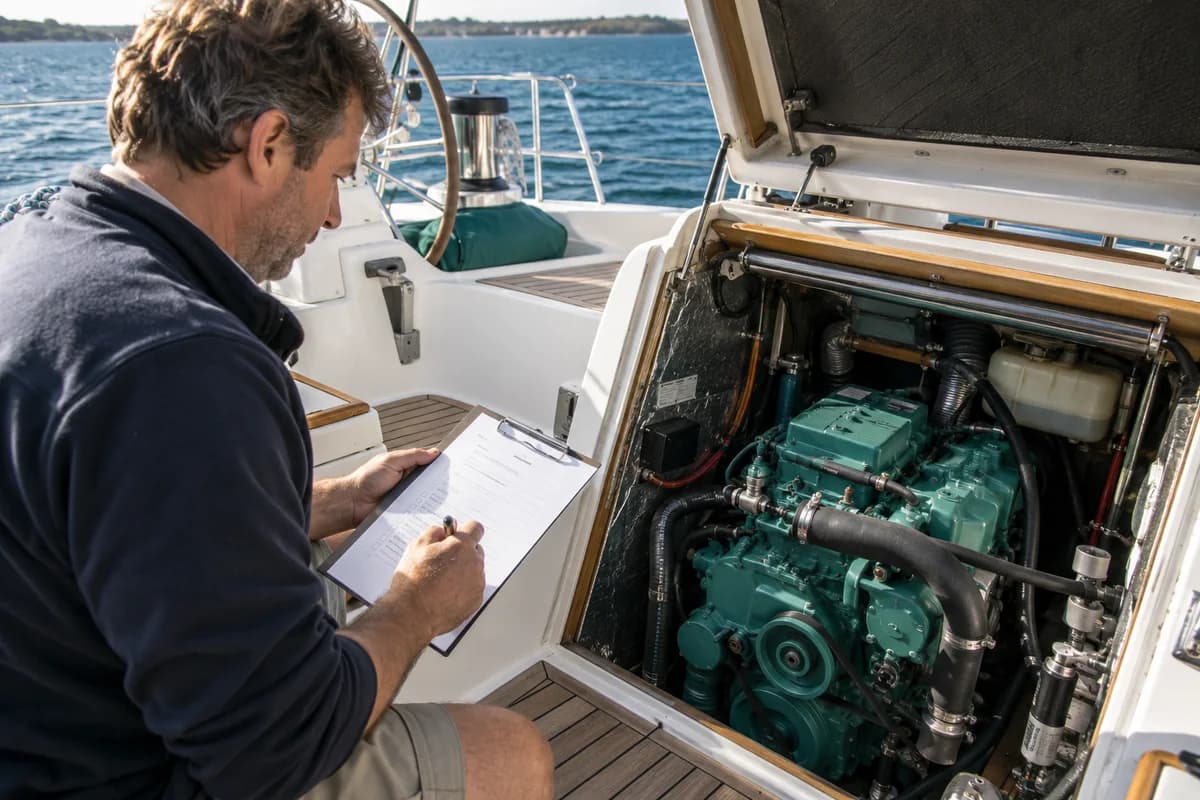
Boat parts often look more interchangeable than they are. A useful enquiry gives a supplier enough information to identify the job, check compatibility and explain what remains uncertain. The aim is to replace guesswork with a short, reusable record before paying for freight or arranging installation.

Identify the equipment, not just the loose part
Photograph the parent equipment’s label and record the model or serial details that are readable. Include a wider view showing where the part fits, plus the dimensions the supplier requests. Describe the function and any markings rather than relying only on a nickname. If the boat has been modified, say so: a boat model does not prove that every fitted item is original. Ask before removing a component, especially if doing so affects the boat’s condition or safe use.
Ask what confirms compatibility
A similar photograph is a starting point, not a specification. Ask the supplier which measurements, connection details or manufacturer information establish a match. When a replacement differs from the original, request an explanation of any additional components or installation changes. Bring the installer into the discussion where fit or performance affects a larger system. Keep the answer with the order so another staff member can understand what was agreed if the conversation continues later.
Separate stock from availability
Ask whether the item is physically held by the seller, available through a distributor or being ordered further afield. Confirm dispatch expectations and the delivery address that will work when it arrives. If the boat is moving, a marina or yard may have its own process for receiving parcels; check first. Tell the supplier if another booking depends on the part, but avoid treating a hoped-for arrival as a confirmed schedule. Clarify the options if the exact item cannot be supplied.
Check the package before the project
On arrival, compare part numbers, quantities and included accessories with the order before arranging the next stage of work. Keep packaging and documents while any questions are resolved. Ask about the returns process before altering, installing or marking a part you are unsure about. Record the final installed item in the boat’s equipment list. A few minutes of documentation now can turn the next replacement into a straightforward reorder rather than another round of photographs and uncertain measurements.
Build a parts enquiry that can be forwarded intact
Put the boat context, parent equipment identification, relevant photographs and the requested item in one message. If someone forwards it to a distributor or specialist, they should not need to reconstruct the missing background from an earlier call. State which details you can confirm and which remain uncertain. Ask the seller what additional information establishes the match. This is particularly valuable when several versions of equipment look similar. A concise, complete enquiry saves time without pretending the owner must already know the technical specification. It also creates a written record of the information on which the proposed replacement was chosen.
Coordinate the supplier and installer early
If another person will install the item, establish who confirms suitability and who supplies related components. Do not assume the installer has approved a product merely because a retailer says it is available. Equally, do not assume the retailer knows every detail of the installation. Share the relevant information between them and keep responsibility clear. Ask whether the proposal includes any additional fittings, preparation or changes. This avoids comparing the cost of a loose part with the cost of a complete installed solution. It also gives everyone a chance to identify uncertainty before the item is ordered.
Create a receiving check before opening the project
When an order arrives, compare the packaging labels and included items with the agreed order while the documentation is still together. If something appears different, ask before altering or installing it. Record which part is destined for which job, particularly when several projects are happening at once. Keep small associated pieces together so they are not mistaken for general spares. Once installation is appropriately completed, update the equipment record with the final item. The receiving check is a simple administrative step that can prevent a missing accessory or mismatched version becoming an expensive interruption at the boat.
Compare your starting points.
Known repeat order
The installed specification is documented.
Is this the same current item and supplied configuration?
Uncertain identification
A label, model or dimension is missing.
What information will establish the correct match?
Alternative replacement
The original item is unavailable or unsuitable.
What installation changes and approvals are needed?
What this looks like in practice.
A sailor orders a replacement fitting that looks correct in a photograph, then learns that an installer needs a different arrangement for the existing setup. A stronger process would have started with the parent equipment, requested dimensions and installation context, followed by confirmation from the people responsible. If the original item is unavailable, the alternative should be discussed as a proposal with any required changes, not assumed to be a direct substitute. The point is not that online ordering is inherently difficult. It is that a product image and a familiar name may omit the exact detail on which a successful replacement depends.
Three steps to a clearer decision.
Record the parent equipment model.
Photograph context and labels.
Confirm compatibility with the supplier.
Take this to the conversation.
- Record the parent equipment model.
- Photograph context and labels.
- Confirm compatibility with the supplier.
- Distinguish stock location from delivery estimates.
- Check the order before installation.
A useful first message.
Replace the bracketed details with your own. Leave unknown information marked as unknown.
Hello, I’m trying to identify [part/function] for [parent equipment and model] on [boat]. Attached are a wider view of the installation, readable labels and [requested measurements]. I can confirm [facts], but [details] are uncertain. Could you tell me what further information establishes the correct match and whether the proposed item includes the necessary accessories? If an alternative is suggested, please identify any installation changes to discuss with my installer. I would also like confirmation of physical stock, dispatch arrangements and the process for resolving a mismatch before anything is altered or installed.
Before you make the next move.
Can I order by the boat model?
That may help narrow the search, but equipment can change over a boat’s life. Confirm the actual installed component using labels, dimensions and the supplier’s identification process before assuming an original specification still applies.
What if the original part is discontinued?
Ask about supported alternatives and what changes they require. An apparently similar item may not be a direct replacement. Involve the installer or equipment specialist before committing to an adaptation.
How should I label an old part for the supplier?
Keep it with a note naming the boat, parent equipment and the place it came from. Add photographs of the installed arrangement and any dimensions requested by the supplier. Keep associated pieces together, and avoid removing anything unless it is safe and appropriate to do so.