An overnight stop and a long cruise put different demands on a battery bank. Explore battery suppliers and installers to discuss storage, charging and the equipment your boat actually runs.

Build a picture of the boat's power use
A battery discussion should begin with the equipment you run and the way you spend time aboard. List the main loads, the hours they are typically used and the charging sources already installed. Describe whether the yacht stays in a marina, sails for weekends or spends longer periods at anchor. If you have reliable readings from existing monitoring equipment, share them with the specialist. Avoid choosing a bank by copying another boat's capacity alone. Two similar yachts can have very different electrical habits, and the useful comparison is between complete systems designed around their actual use.
Treat a change of technology as a system project
Replacing a battery with the same specified type is different from moving to another technology. Chargers, alternators, protection, monitoring and control arrangements may all need assessment. Ask a marine electrical specialist to evaluate the whole installation before committing to a new bank. Manufacturer documentation, including Victron's battery and BMS guidance, makes compatibility a product-specific design question. Do not assume that a battery marketed as convenient removes the need to assess the boat. The directory can help you find a provider, but it cannot determine which combination of components is suitable for an individual electrical system.
Make the installation practical to maintain
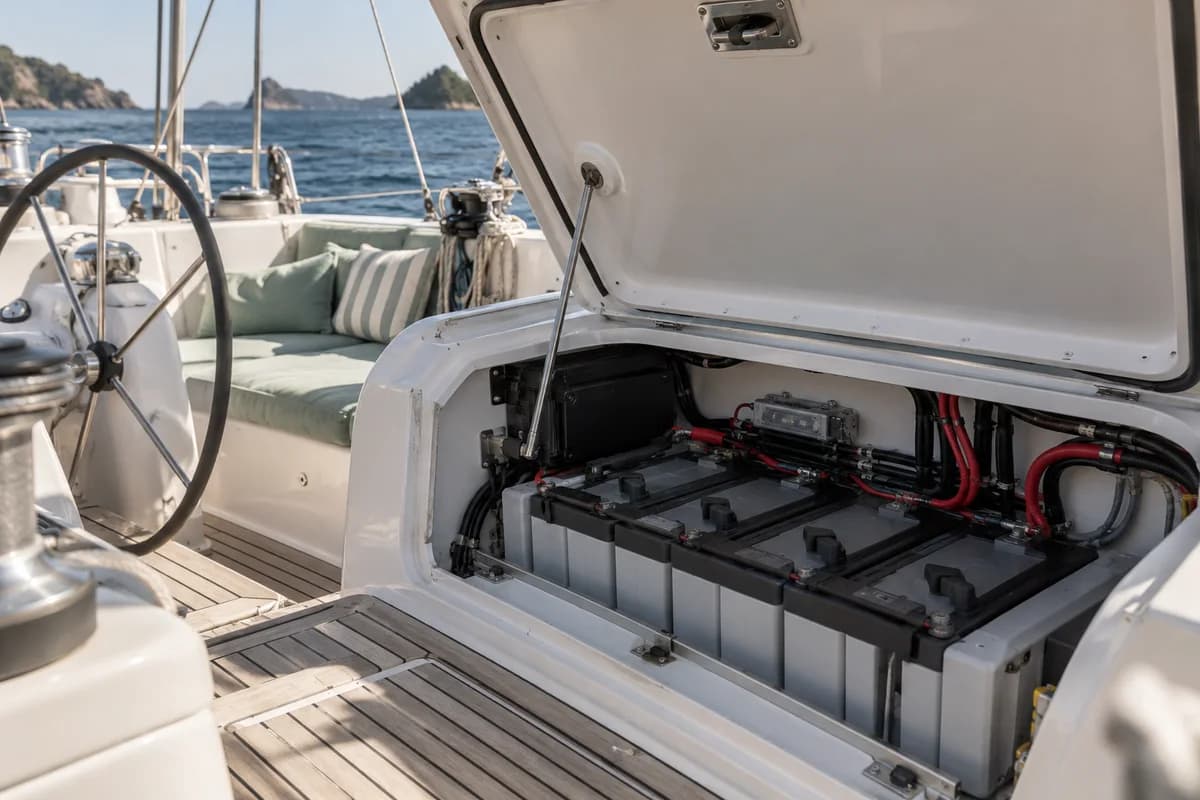
Discuss available space, secure mounting, access and the environment in which the batteries will operate. Give the installer photographs of accessible areas and any diagrams or past invoices you have. Ask how the proposed arrangement will be inspected and serviced once fitted. A tidy appearance is welcome, but you also need to know where important controls and service points are located. If cabinetry or other equipment must be moved, include that work in the scope. Planning access now is preferable to discovering later that an ordinary replacement or inspection requires dismantling an unrelated part of the yacht.
Compare the complete installed cost
Ask each provider to identify the batteries, supporting components, installation work and commissioning included in its quote. Clarify which existing equipment remains and how compatibility has been established. Discuss warranty responsibilities for the products and for the installation separately. If the project is staged, ask how the interim setup will be assessed and documented. A low battery price can be misleading if essential supporting changes are omitted from the comparison. Your decision should be based on an understood, functioning arrangement with a clear scope, rather than a single capacity figure or a promise that one product suits every boat.
Learn the system before depending on it
At handover, ask the installer to explain normal operation, monitoring information and the actions appropriate to warnings or faults. Keep diagrams, model details and settings records with the boat documents. Follow the manufacturer's guidance for use and periods of storage, and contact the specialist when something is unclear. Make time to observe the new system during ordinary local use before relying on it for a longer trip. When future equipment is added, revisit the power plan with the updated records. A battery upgrade should leave the boat's electrical arrangement better understood, not simply larger and more expensive.
Make the first enquiry count.
You want more useful capacity, but the existing charging and electrical arrangement needs to be understood first. Provide equipment records and describe typical use. Ask the appropriate professional to assess the whole system before choosing a battery from a capacity figure or a promotion.
What a useful quote should settle
Compare system assessment, compatibility, installation, required supporting changes, testing and updated operating information.
How to compare marine service quotes →Which conversation do you need?
Start with the situation that describes your job. These are different enquiry briefs, so ask the provider to confirm the scope that fits yours.
Condition assessment
You need to understand an existing limitation.
What should be established before selecting a replacement?
System change
A different battery arrangement is proposed.
Which charging and protection questions require professional design?
Documented replacement
A specified item is being renewed.
Who confirms compatibility and records the completed work?
Three steps to a clearer decision.
What should be established before selecting a replacement?
Which charging and protection questions require professional design?
Who confirms compatibility and records the completed work?
Before you make the next move.
Is a different battery type a drop-in upgrade?
Do not assume that. Ask a qualified marine electrical professional about compatibility with the current charging, protection and installation arrangements. The assessment should cover the system, not only the space occupied by the battery.
What information helps with an enquiry?
Provide the current battery details, known charging equipment and a description of how the boat is used. Include available diagrams and label uncertain information clearly rather than guessing the installation’s specification.
Marine batteries: enquiry checklist
Use this to prepare your first enquiry. Print a copy to keep with your notes.
0 of 5 ready · Checks reset when you leave this page.
Use the guidance relevant to your equipment, location and intended use.
Victron: battery system design guidance ↗