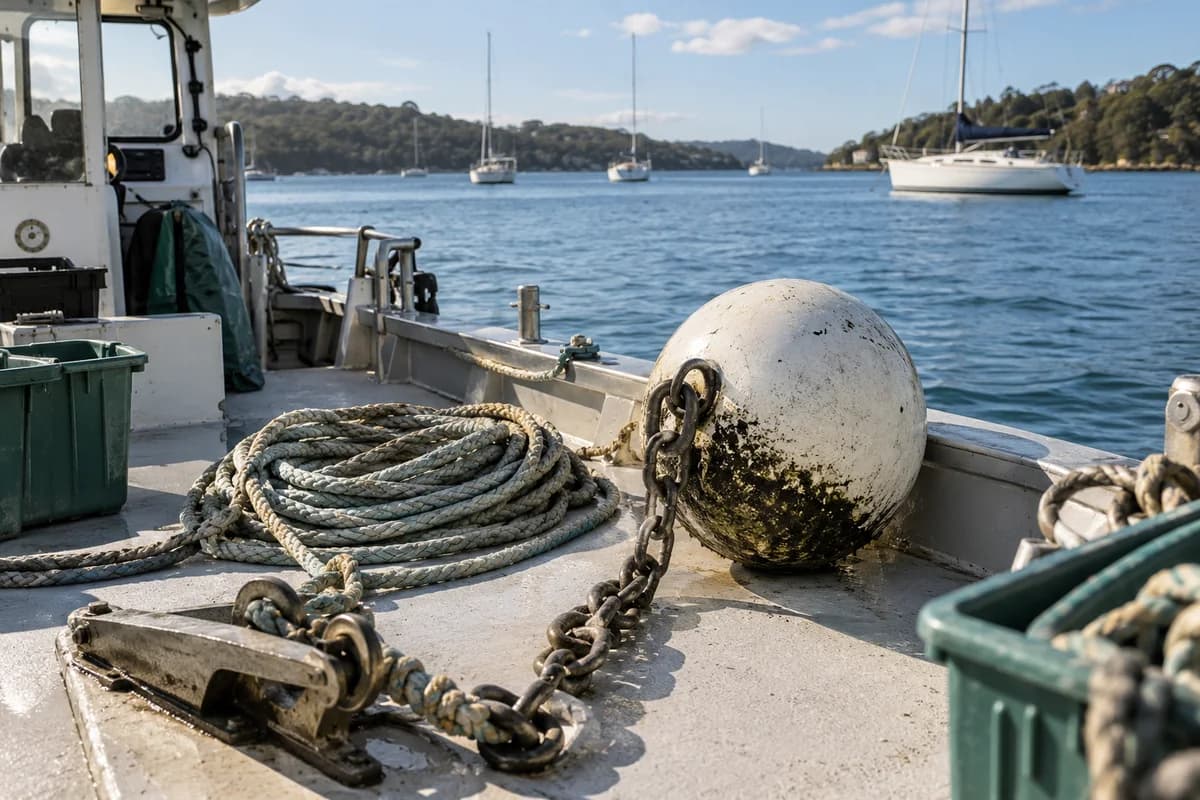
Mooring tackle works while you are away from the water. Explore businesses offering mooring-related work and discuss the needs of your particular location and vessel.

Treat the mooring as its own asset
A boat may be visible from shore while much of its mooring arrangement is hidden beneath the surface. That makes records and a clear service relationship especially useful. Start by identifying the exact mooring, the responsible authority or operator and the vessel assigned to it. Gather any previous inspection or service information before contacting a provider. Explain whether you need routine work, an assessment after a concern or advice about a different vessel. Avoid assuming that a mooring suitable for one boat is automatically suitable for another. The provider needs the actual location and vessel details to discuss the job meaningfully.
Clarify the scope of the service
Ask what the provider will inspect, what can be accessed and how the findings will be recorded. A visit to the visible pickup arrangement is different from a more extensive assessment of the mooring system. Have the business explain its terminology and the limits of the proposed work. Discuss replacement decisions in advance, including what can be authorised without another conversation. If the provider encounters unexpected deterioration or an inaccessible component, agree on how it will report that issue. A useful service is one that leaves you with an understandable account of what was done and what remains unresolved.
Coordinate with the people responsible
Mooring arrangements may involve an owner, a site operator and an authority, depending on the location. Establish who can authorise work and whether any approvals are needed before changes are made. Ask the provider how it works within the local arrangements, and confirm requirements with the responsible organisation where necessary. Do not rely on a general directory description as evidence of permission to install or alter a mooring. Keeping these roles clear helps avoid duplicate bookings and misunderstandings. It also makes it easier to maintain a continuous record when the boat changes hands or the servicing business changes.
Plan access and vessel movements
Tell the provider whether the boat will be on the mooring at the time of the visit and ask what arrangements are required. Work may depend on local conditions, access and the operator's equipment. Discuss scheduling flexibility and how you will be notified if the visit has to move. If the boat needs to be relocated, arrange that separately and make sure responsibilities are understood. Give the provider a contact who can make decisions during the job. A realistic plan accounts for the work itself and for where the vessel will be kept while that work is being carried out.
Keep a record you can use next time
Request a dated report or work record that identifies the mooring and describes inspection findings, replaced components and any follow-up recommendations. Store photographs and invoices together, and note who undertook the service. Ask the provider to explain any unfamiliar terms before the job is closed. Use the relevant authority's requirements and the provider's documented advice to plan future attention, rather than inventing a universal service interval. If you change boats or notice a concern, revisit the arrangement promptly with the responsible people. Continuity of information is valuable when the equipment doing the holding is mostly out of sight.
Make the first enquiry count.
A mooring appointment begins with identifying the actual installation and the records available for it. Provide the location and relevant operator details, then ask what the service covers and what access or authorisation is needed. Keep any reported findings with the previous maintenance history.
What a useful quote should settle
Clarify the inspection or service scope, component records, reporting, changes requiring approval and responsibilities for follow-up work.
How to compare marine service quotes →Which conversation do you need?
Start with the situation that describes your job. These are different enquiry briefs, so ask the provider to confirm the scope that fits yours.
Recorded maintenance
The installation has an identifiable service history.
Which previous records should accompany the booking?
Uncertain history
The owner cannot establish past work.
What assessment and identification are needed first?
Recommended follow-up
An earlier visit identified additional work.
Which findings does the new scope address and document?
Three steps to a clearer decision.
Which previous records should accompany the booking?
What assessment and identification are needed first?
Which findings does the new scope address and document?
Before you make the next move.
Does a service include replacing every component?
Do not assume that. Ask what is inspected, what is routinely included and which replacements require a separate decision. Keep the written scope with the report so you can understand what the visit established.
What if I have no previous records?
Say so and ask the provider what information it needs to identify and assess the installation. Do not invent dates or specifications. Begin a documented history with the findings and work actually completed.
Mooring service: enquiry checklist
Use this to prepare your first enquiry. Print a copy to keep with your notes.
0 of 5 ready · Checks reset when you leave this page.