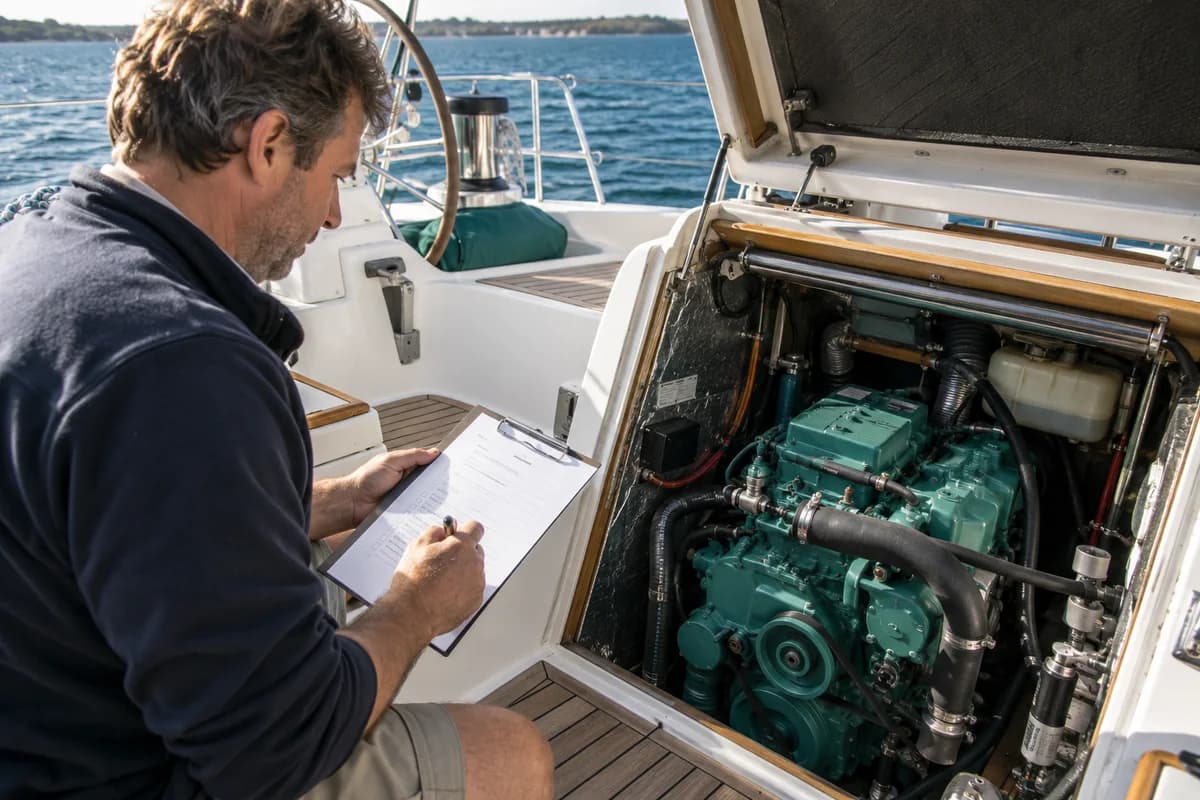
A survey helps put a vessel’s condition into context. Find marine surveyors and discuss the purpose of the assessment, access to the boat and the detail you need in the report.

Choose the survey for the question
Marine surveys are commissioned for different purposes, including purchase decisions, insurance requirements and a specific concern about condition. Explain the purpose to the surveyor before booking. If another organisation needs a report, obtain its requirements and confirm whether the proposed scope meets them. A general condition survey does not automatically answer every structural, mechanical or valuation question. The useful first conversation establishes what will be inspected, how access will be obtained and what will remain outside the assessment. This helps you choose the right professional service instead of relying on the broad word survey to mean more than it does.
Look for relevant vessel experience
Ask about the surveyor's experience with sailing yachts of similar construction and type. A specialist familiar with the vessel's materials and arrangement can explain the issues it expects to assess and where additional expertise may be needed. Discuss professional background, reporting approach and any relevant membership or credentials, verifying claims where they matter to your decision. Do not interpret directory inclusion as independent certification or endorsement. If the boat has unusual construction, significant modifications or a known incident, explain that early. The surveyor needs enough information to decide whether it can undertake the assignment appropriately.
Agree on access and exclusions
A boat afloat presents different inspection opportunities from one ashore. Ask whether lifting, access to internal spaces or a sea trial forms part of the assignment and who arranges those steps. Identify machinery, rigging or equipment that may need a separate specialist. Have the surveyor explain limitations clearly, including areas that cannot be assessed without dismantling. Those exclusions are important to the meaning of the final report. A defined inspection with transparent limits is more useful than a vague promise of a complete check that leaves you uncertain about what was actually seen or tested.
Make the report usable
Ask when the report will be available and whether you can discuss the findings with the surveyor. A useful document distinguishes observations, concerns, recommendations and inaccessible areas. Photographs and clear references help you understand which part of the vessel is being discussed. If something is unfamiliar, ask for an explanation rather than making assumptions from technical wording. For a purchase decision, arrange timing that allows you to consider the findings with any other advisers involved. The report is evidence within a wider decision; it should not be treated as a guarantee that every future defect has been predicted or excluded.
Carry the information into ownership
If you acquire the boat, keep the survey alongside maintenance records and document work undertaken in response. Ask the relevant repair specialists to assess and quote their scope rather than assuming the survey itself is a repair specification. If the assignment was for insurance or another organisation, follow up with that organisation about what it requires next. Retain the report's original limits and date when referring to it later: a historical survey describes an assessment at a particular time. Used properly, it gives future maintenance and professional conversations a better starting point without replacing ongoing attention to the vessel's condition.
Make the first enquiry count.
A survey should be commissioned to answer an identified question. Explain whether the purpose concerns purchase, condition or another party’s requirement. Ask the surveyor to describe access, scope and exclusions before arranging the vessel, yard and timing around the appointment.
What a useful quote should settle
Compare the agreed purpose, inspected areas, specialist exclusions, report format, timing and discussion of findings.
How to compare marine service quotes →Which conversation do you need?
Start with the situation that describes your job. These are different enquiry briefs, so ask the provider to confirm the scope that fits yours.
Pre-purchase purpose
A prospective owner needs condition information.
What scope and exclusions apply to that purpose?
Specific concern
A particular area or question needs assessment.
Is this within the proposed professional scope?
Third-party requirement
Another party needs a defined report.
Have its requirements been confirmed before commissioning?
Three steps to a clearer decision.
What scope and exclusions apply to that purpose?
Is this within the proposed professional scope?
Have its requirements been confirmed before commissioning?
Before you make the next move.
Will a survey cover every engine and rig detail?
Ask the surveyor about the exact scope. Some questions require another specialist or a different inspection arrangement. Do not infer complete coverage from a general report title.
Can I reuse an old survey?
An older report can provide context, but ask the appropriate professional or requesting party what current information is needed. It describes an assessment at a particular time and scope, not an automatic statement about today’s condition.
Marine surveyor: enquiry checklist
Use this to prepare your first enquiry. Print a copy to keep with your notes.
0 of 5 ready · Checks reset when you leave this page.